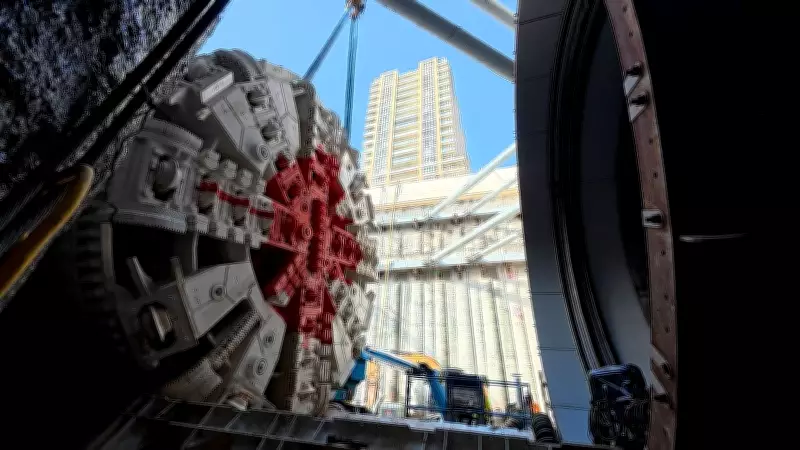
Major Milestone Reached as Tunnelling Commences for Toronto's Ontario Line
In a significant step forward for urban transit, tunnel boring machines have officially begun their subterranean journey beneath downtown Toronto. This marks the start of the critical excavation phase for the highly anticipated Ontario Line, a new subway route set to transform the city's transportation network.
Digging Deep: The Engineering Feat Underway
The massive tunnel boring machines, often described as mechanical moles, are now carving through the earth to create the underground pathways necessary for the new line. This process involves precise engineering to navigate the complex urban geology and existing infrastructure below Toronto's bustling streets.
The project represents one of the largest public transit investments in recent Canadian history, with the tunnelling phase expected to continue for several years as the machines progress along the planned route.

Project Timeline and Anticipated Impact
According to current projections, the Ontario Line is scheduled to open to the public in the early 2030s. This timeline accounts for the extensive construction, station development, and system testing required before passenger service can commence.
The new line promises to:
- Alleviate congestion on existing transit routes
- Provide faster connections across the city
- Support economic growth through improved accessibility
- Reduce environmental impact by encouraging public transit use
When completed, the Ontario Line will stretch approximately 15 kilometers, connecting numerous neighborhoods and creating vital links to other transit systems throughout the Greater Toronto Area.
Overcoming Urban Challenges
Tunnelling beneath a densely populated metropolitan area presents unique challenges. Engineers must carefully plan the route to avoid existing subway tunnels, utility lines, building foundations, and other underground obstacles.
The tunnel boring machines operate with remarkable precision, installing concrete segments to form the tunnel walls as they advance. This method minimizes surface disruption compared to traditional cut-and-cover construction techniques.
Despite the complexity, project officials express confidence in the timeline, noting that similar projects in other global cities have demonstrated the feasibility of such ambitious underground transit expansions.
Looking Toward the 2030s
As the tunnel boring machines continue their steady progress beneath Toronto, residents can anticipate periodic updates on construction milestones. The project represents not just infrastructure development, but a long-term investment in the city's future mobility and sustainability.
The Ontario Line's completion in the early 2030s will mark a new era for Toronto transit, potentially serving hundreds of thousands of daily passengers and reshaping how people move through Canada's largest city.