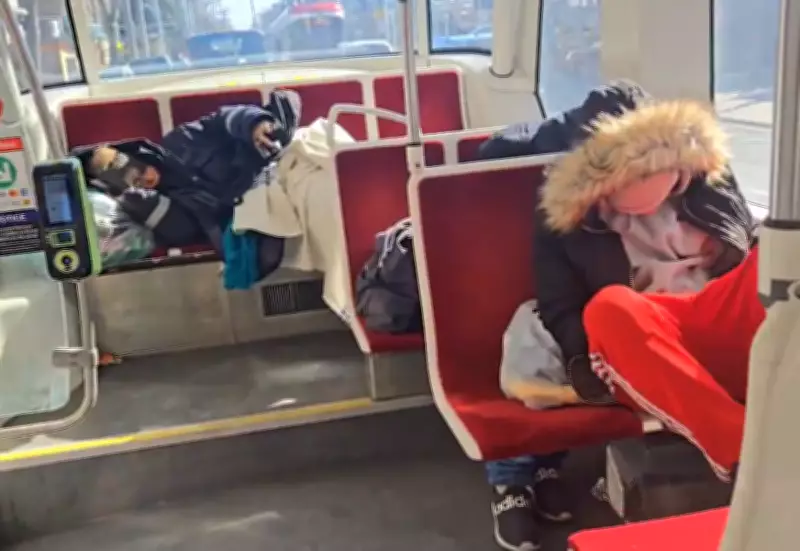
In a troubling trend, Toronto's public transit system is increasingly being used as a makeshift shelter by individuals under the influence of drugs, raising serious safety and public health concerns. Dubbed "Hotel 501" by some, the TTC streetcars have become a refuge for those seeking to sleep off their highs, often at the expense of other passengers' comfort and security.
Alarming Incidents on Transit Vehicles
Recent reports highlight disturbing scenes on TTC vehicles, particularly the 501 streetcar line. Lynne Brooks, a local resident, captured video footage at 10:30 a.m. on a Tuesday, showing four individuals fast asleep on a westbound streetcar in the Beaches area. Brooks expressed disgust, noting she has witnessed acts such as public masturbation and urination on transit rides, which she says are not uncommon.
These incidents often occur in the presence of families and children, with drug users showing little regard for rules or basic decency. The transit system, in some cases, serves as an extension of harm reduction sites, where addicts can access drug paraphernalia. After using drugs, many head to warm streetcars, buses, or subway trains to sleep, creating an unsafe environment for other riders.

Safety Risks and Violent Encounters
The situation escalates beyond mere discomfort, with violent incidents becoming more frequent. John Moore, a well-known radio host and philanthropist, recounted a scary encounter at Osgoode Station during March break. He intervened when a woman was violently assaulting a man, putting his own life at risk to help. Such events are part of a broader pattern of stabbings, fires, and assaults on the TTC, often linked to drug-related activities.
Brooks also described a case where she called an ambulance for a man with gangrene, whose condition emitted a foul odor. These stories underscore the dire public health crisis unfolding on Toronto's streets and transit lines, with addicts staying close to drug supplies accessible via the transit system.
Political and Social Responses
As the issue gains attention, political leaders are grappling with solutions. Premier Doug Ford's government is shifting away from funding safe injection sites, proposing a $550-million abstinence-based approach through Homelessness and Addiction Recovery Treatment (HART) hubs. However, six former Toronto mayors, including John Tory and David Miller, have opposed this move, arguing in a letter that closing such sites leads to increased harm and death without positive impacts.
Critics point out that these former mayors, while advocating for maintaining current harm reduction models, have not offered personal assistance, such as allowing addicts to stay in their homes. This highlights the complexity of addressing homelessness and addiction in the city.
Implications for the FIFA World Cup
With Toronto set to host events for the FIFA World Cup of Soccer, concerns are mounting about the city's ability to ensure visitor safety. The presence of drug users on transit, coupled with incidents of violence and open drug use, could pose significant risks to tourists. If a visitor is harmed, there could be severe repercussions for the city's reputation and public trust.
Many argue that the current situation is unsustainable and calls for collaborative efforts across political lines to prevent the transit system from becoming a "catch basin" for the drug crisis. Ensuring safety for all, including those with mental health and addiction issues, is paramount as Toronto prepares to welcome the world.
Ultimately, the use of TTC vehicles as "zombie hotels" reflects deeper societal challenges that require urgent and compassionate solutions to protect both residents and future visitors.