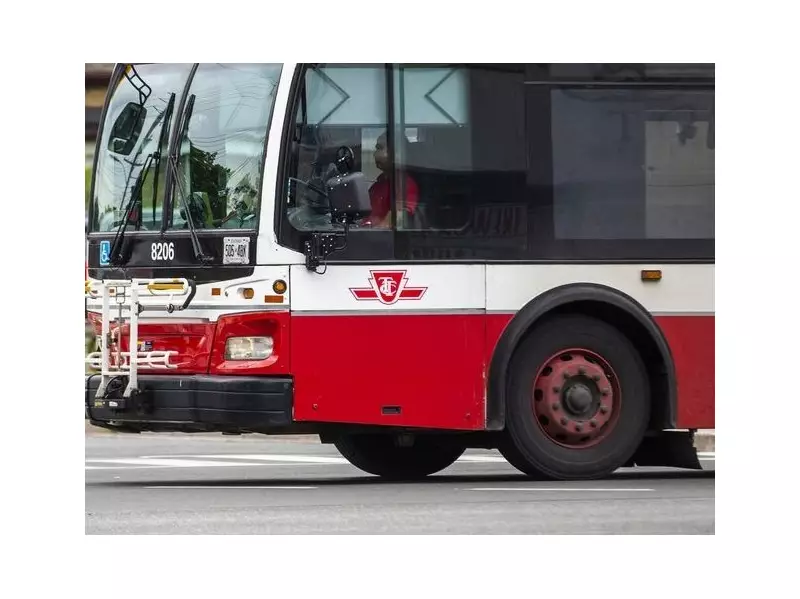
TTC Implements Advanced Safety Technology in Six-Month Pilot Project
The Toronto Transit Commission has officially launched a comprehensive six-month pilot project aimed at enhancing safety for all road users through innovative technological solutions. This initiative involves equipping 30 TTC buses with cutting-edge systems designed to alert operators about potential collisions with vulnerable individuals while simultaneously reducing dangerous blind spots.
How the New Safety Systems Operate
The newly implemented technology functions through a dual-warning system that activates both externally and internally on participating buses. For pedestrians and cyclists in proximity to these vehicles, the system emits audible alerts including "Caution, bus approaching" when near moving buses and "Danger, step back" when collision risks become imminent.
Inside the bus cabin, operators receive visual warnings through flashing panels accompanied by distinct audible alerts. These safety notifications are generated based on sophisticated calculations considering both the distance between buses and surrounding objects as well as the speed at which vehicles are traveling.

Strategic Route Selection for Maximum Impact
The pilot project will concentrate on four heavily utilized transit corridors throughout Toronto: the 29/329/929 Dufferin route, 63/363 Ossington route, 161 Rogers Road route, and 168 Symington route. These specific routes were deliberately chosen due to their high volumes of pedestrian, cyclist, and motorist traffic, providing optimal conditions for testing the technology's effectiveness in real-world urban environments.
Leadership Perspectives on Transit Safety
Toronto Mayor Olivia Chow emphasized the initiative's significance in a public statement, noting: "We are always looking at new tools that will help us improve road safety, especially for our most vulnerable road users. With 1,600 TTC buses on the road every day, any chance to improve TTC bus safety is a chance to improve road safety citywide."
TTC Chair Jamaal Myers reinforced this commitment to safety, stating: "Safety is paramount at the TTC, and I welcome any opportunity to improve safety for both TTC operators and transit users. Through this six-month pilot, the TTC will gather valuable information and insights, and I look forward to seeing the results."
Project Objectives and Future Implementation
The primary goals of this extensive pilot include evaluating each technology's practical effectiveness, incorporating lessons learned from real-world operation, and determining whether the safety systems should be retrofitted across the existing TTC bus fleet. TTC CEO Mandeep S. Lali explained: "Our bus operators all receive extensive training to ensure they have the tools and knowledge to keep everyone safe. These new technologies, if they prove helpful, could be another step we take to help reduce the risk of collisions."
Background and Comparative Context
The TTC conducted controlled testing of both safety technologies throughout 2025 before launching this broader pilot program. Similar driver-assist systems have already been implemented in other major transit networks, including York Region, Chicago, and Boston, providing valuable comparative data for Toronto's initiative.
This safety enhancement comes in response to recent tragic incidents on Toronto's transit system, including an October 2025 incident where a 78-year-old woman was fatally injured while attempting to board a TTC bus at Royal York Station in Etobicoke. Police investigations determined the senior citizen fell and was struck by a bus that was pulling away from the station platform.
The TTC has established channels for public feedback on these new technologies through their customer service team, encouraging community input throughout the pilot period as they work toward creating safer transit experiences for all Toronto residents and visitors.