Truck Parking Crisis: 2.2 Million Ramp Stops Reveal National Safety Issue
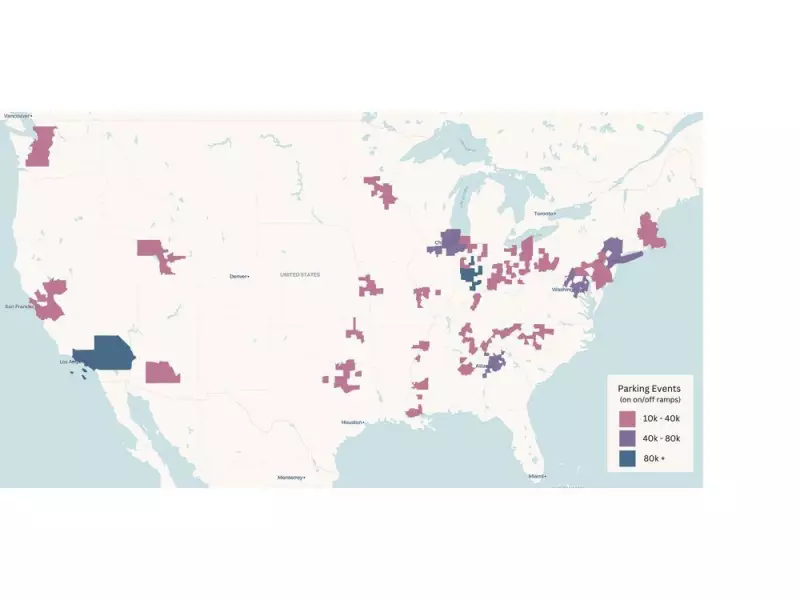
For America's long-haul truck drivers, completing a demanding 10-hour shift often leads to another significant challenge: finding a secure location to rest. A groundbreaking nationwide study conducted by Altitude by Geotab and HNTB has uncovered a staggering reality. The research documents over 2.2 million parking events occurring annually on U.S. highway ramps, with more than 300,000 of these being extended, long-duration stops. This data highlights a severe and growing infrastructure deficit that leaves professional drivers without access to safe, authorized parking facilities.
The Human Reality Behind the Statistics
The report, titled "A Nationwide Study of Interstate Ramp Parking," emphasizes that this phenomenon extends far beyond a mere logistics concern. It represents a critical public safety issue affecting both truck operators and general motorists. Altitude's detailed analysis paints a vivid picture of the typical circumstances facing drivers who resort to ramp parking.
These drivers have typically:

- Driven approximately 520 miles during their shift.
- Been operating their vehicle for nearly 10 consecutive hours.
- Approached the legal limit of 11 hours of driving time under federal Hours-of-Service regulations.
The study further identifies that peak demand for these unauthorized parking locations occurs mid-week, specifically on Tuesday and Wednesday nights. When drivers arrive at major freight corridors, they frequently discover that designated truck stops and public rest areas are completely full. Faced with no alternatives, they make a dangerous compromise: parking on the narrow shoulder of a highway exit ramp, mere inches from high-speed traffic, simply to obey the law and obtain necessary sleep.
Indianapolis Emerges as a Critical Hotspot
While this is a nationwide problem, the burden falls disproportionately on drivers operating within the country's most essential logistics networks. The research identifies Indianapolis, Indiana, as one of the primary epicenters for ramp parking activity in the United States.
Known as the "Crossroads of America," Indianapolis experiences a massive convergence of freight traffic via major interstates including I-65, I-70, I-69, and I-74. Despite this vital role in national commerce, the region suffers from a severe shortage of truck parking capacity to support the drivers moving these goods. Following Indianapolis, the study pinpointed other metropolitan areas with acute shortages that force drivers onto ramps:
- Los Angeles, California
- New York-Newark, New York-New Jersey
- Chicago, Illinois
"This comprehensive data allows both the public and private sectors to move beyond anecdotal evidence and implement targeted, capacity-building solutions," stated Nate Veeh, AVP of Business Development at Altitude by Geotab. "The 2.2 million annual parking events on highway ramps are not random occurrences. They represent a clear, data-driven signal indicating where our infrastructure investment is most critically needed. Our analysis specifically identifies freight hubs like Indianapolis, Atlanta, Los Angeles, and New York as primary stress points requiring immediate attention."
Addressing the Real-World Consequences
The report underscores why resolving this parking shortage is imperative for multiple stakeholders, including truck drivers, passenger vehicle operators, and state transportation planners. The continued use of highway ramps for overnight parking creates hazardous conditions, increases the risk of accidents, and contributes to driver fatigue—a known factor in roadway safety. Developing adequate parking infrastructure is essential for supporting the national supply chain and protecting all who use America's highways.