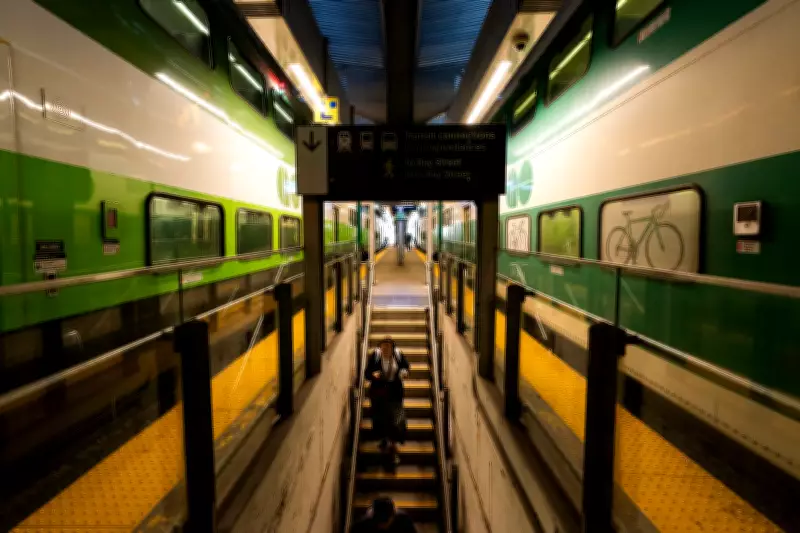
Disabled Train Near Union Station Causes Major Commuter Delays and Service Suspension
A significant transit disruption unfolded in downtown Toronto on Monday morning, February 2, 2026, as a disabled train near Union Station caused extensive delays for GO Transit services and led to the temporary suspension of the UP Express airport rail link. The incident, reported around the morning rush hour, created considerable inconvenience for commuters relying on these critical rail networks.
Impact on GO Transit and UP Express Operations
The disabled train, positioned in close proximity to Union Station—Toronto's primary transportation hub—necessitated immediate operational adjustments. Metrolinx, the provincial agency overseeing both services, confirmed that GO Train routes experienced substantial delays across multiple lines as crews worked to address the situation. Simultaneously, the UP Express service, which connects Union Station to Toronto Pearson International Airport, was temporarily suspended entirely to ensure safety and facilitate recovery efforts.
Commuters faced extended wait times and uncertainty during the morning peak travel period, with many expressing frustration over the sudden disruption to their daily routines. Union Station serves as a central nexus for regional transit, meaning the incident had a ripple effect on connecting bus and streetcar services throughout the Greater Toronto Area.

Response and Recovery Efforts
Transit officials mobilized quickly to manage the disruption, deploying additional staff to assist passengers and provide real-time updates. Alternative transportation options were communicated via digital platforms and station announcements, though the scale of the disruption posed significant challenges. The priority remained safely moving the disabled train to clear the tracks and restore normal service as swiftly as possible.
This incident highlights the vulnerability of concentrated transit infrastructure to single-point failures. Union Station's role as a critical juncture means that even localized issues can have widespread consequences for the regional transportation network, affecting thousands of daily riders.
Broader Context for Toronto Commuters
Such disruptions are particularly impactful in a city like Toronto, where public transit is essential for managing urban congestion and supporting economic activity. The GO Train network facilitates the movement of suburban residents into the city core, while the UP Express is a vital link for air travelers and airport employees. Service interruptions not only inconvenience individuals but can also have economic ramifications, from delayed business meetings to missed flights.
As recovery operations continued, Metrolinx advised passengers to check service status updates regularly and consider adjusting their travel plans. The agency also emphasized its commitment to investigating the cause of the train failure to prevent similar incidents in the future, underscoring the ongoing need for robust maintenance and contingency planning in public transit systems.