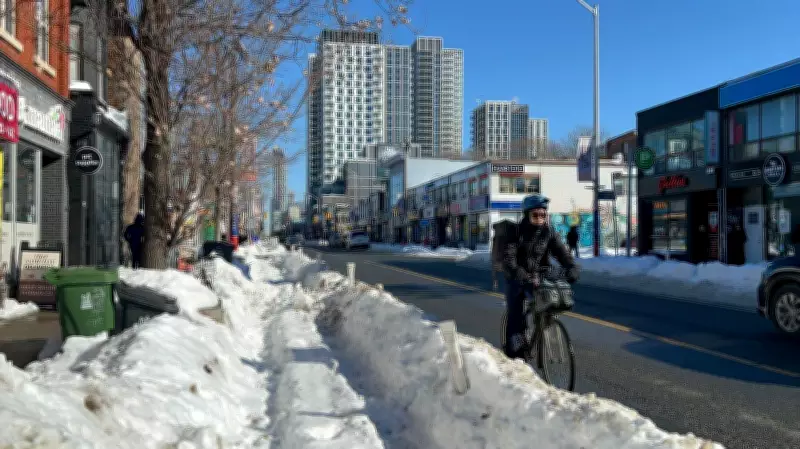
Toronto Cyclists Face Persistent Obstacles as Snow Lingers in Bike Lanes
Cyclists in Toronto are expressing mounting frustration as key bike lanes across the city, most notably along the prominent Bloor Street corridor, remain partially or fully obstructed by snow and ice. This situation persists more than a week after a historic winter storm blanketed the region, raising significant questions about the city's winter maintenance priorities and its commitment to active transportation infrastructure.
A Lingering Problem After a Record Snowfall
The issue stems from a major snowstorm that hit Toronto in late January 2026, depositing a record amount of snowfall. While major roadways have been largely cleared for vehicular traffic, many designated bike lanes have been left clogged with compacted snow, slush, and ice. This has forced cyclists to either navigate hazardous conditions within the lanes or merge into regular traffic, creating safety concerns for all road users.
"It's incredibly frustrating and frankly dangerous," said one regular commuter who uses Bloor Street daily. "The city promotes cycling as a green alternative, but when winter hits, we're often left to fend for ourselves. The lanes become unusable, pushing cyclists into conflicts with cars."

Bloor Street: A Symbolic Battleground for Urban Cycling
The blocked lanes on Bloor Street are particularly symbolic. This corridor is home to one of Toronto's most used and politically significant bike lane networks. Its installation was the result of years of advocacy and represents a major investment in the city's cycling infrastructure. The current state of neglect, therefore, feels like a step backward for many in the cycling community.
Advocacy groups are pointing out that consistent and timely snow removal from bike lanes is not just a convenience issue but a matter of public safety and equity. It ensures that those who rely on bicycles for transportation—whether for cost, health, or environmental reasons—can do so year-round.
Calls for Improved Winter Maintenance Protocols
The ongoing situation has sparked calls for the City of Toronto to review and improve its winter maintenance protocols for active transportation corridors. Critics argue that bike lanes should be cleared with the same priority as arterial roads to maintain a complete and safe transportation network.
Key concerns being raised by cyclists and advocates include:
- The safety risk of forcing cyclists into mixed traffic on snow-narrowed roads.
- The inconsistency in clearing standards between different wards and streets.
- The long-term impact on the city's climate goals if cycling becomes a seasonal-only option due to poor maintenance.
- The need for specialized smaller plows or equipment designed specifically for bike lane clearance.
City officials have acknowledged the complaints, citing the unprecedented volume of snow and the logistical challenges of a major storm cleanup. However, as days turn into weeks, the patience of Toronto's cycling community is wearing thin, with many demanding a more reliable and accountable system for winter bike lane maintenance to be implemented before the next major snowfall.