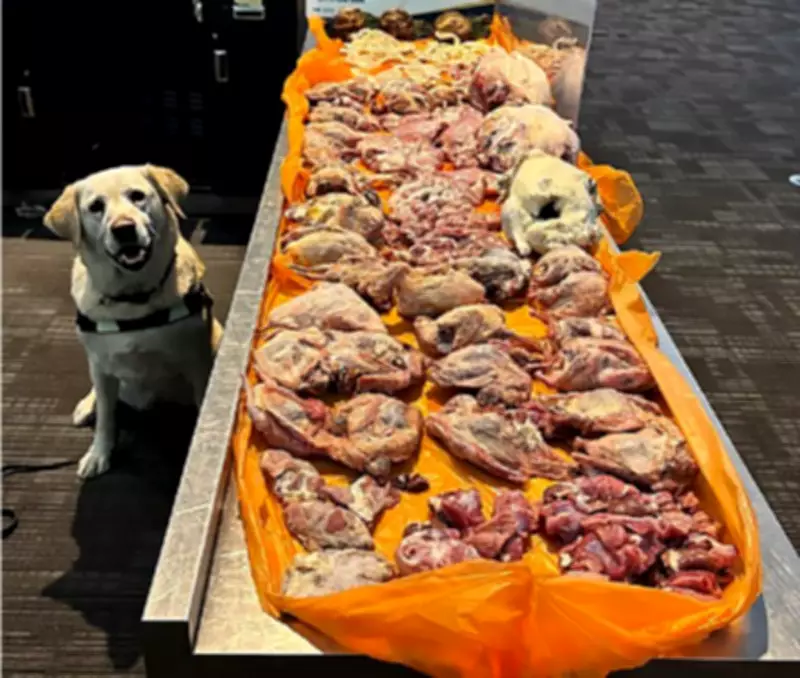
In a significant biosecurity intervention, a highly trained detection dog working with the Canada Border Services Agency (CBSA) at Toronto Pearson International Airport successfully identified and led to the seizure of approximately 22.5 kilograms of raw meat from a passenger arriving from Egypt. The incident underscores the critical role of canine units in safeguarding national agricultural and public health standards.
Detailed Discovery of Prohibited Goods
The seizure occurred during a routine baggage inspection, where the detection dog, part of the CBSA's specialized PeelNewsDetection program, alerted officers to the presence of undeclared animal products. Upon examination, authorities discovered a substantial quantity of raw meat, including duck, pigeon, chicken, and rabbit, all packed within the passenger's luggage. This interception highlights the ongoing efforts to prevent the introduction of foreign animal diseases and invasive species into Canada, which could have devastating effects on local ecosystems and farming industries.
Importance of Canine Detection in Border Security
Detection dogs like the one involved in this case are invaluable assets in border security operations. Their acute sense of smell allows them to identify organic materials that might evade traditional screening methods. This incident demonstrates how these canine units enhance the CBSA's ability to enforce strict import regulations, particularly concerning agricultural and food products that pose biosecurity threats. The raw meat seized could have carried pathogens or parasites not present in Canada, potentially leading to outbreaks that compromise food safety and wildlife health.

Broader Implications for Travel and Compliance
Travelers are reminded that bringing raw meat and other animal products into Canada without proper declaration and permits is strictly prohibited under the Health of Animals Act and related regulations. Violations can result in severe penalties, including fines and prosecution, as authorities prioritize protecting the country's agricultural integrity. This seizure serves as a stark warning to all passengers about the consequences of non-compliance, emphasizing the need for transparency and adherence to international travel guidelines to avoid legal repercussions and contribute to global biosecurity efforts.
The CBSA continues to leverage advanced technologies and trained personnel, including detection dogs, to monitor and secure border points across Canada. This proactive approach not only deters illicit activities but also educates the public on the importance of responsible travel practices in an interconnected world.