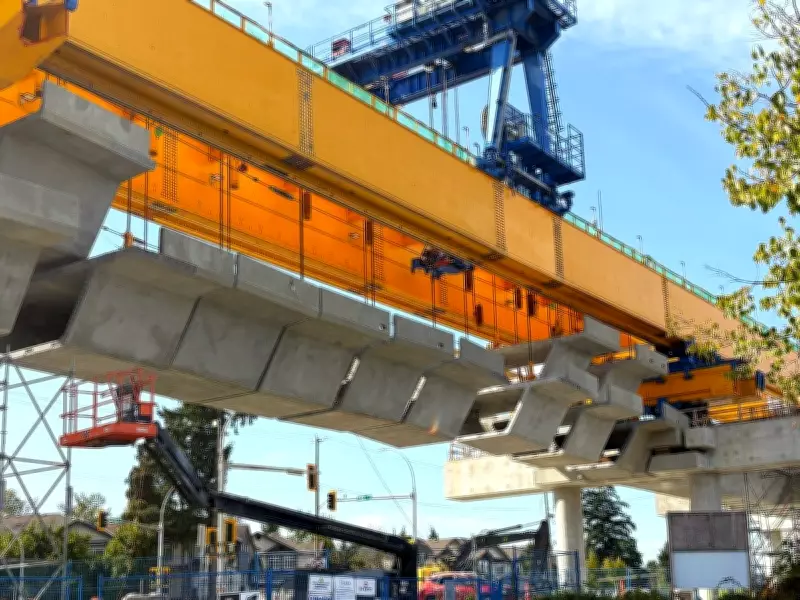
Premier David Eby announced Friday that the nearly $6-billion Surrey-Langley SkyTrain extension has reached an important landmark, with construction now underway on all eight stations along the 16-kilometre line. Speaking at the future Willowbrook Station in Langley, Eby emphasized that this is the first rapid transit project south of the Fraser River in four decades and remains on schedule for completion in fall 2029.
Project Overview
The extension will carry the Expo Line east from King George Station in Surrey along Fraser Highway to 203 Street in Langley. Originally estimated at $4 billion, the cost has risen by about 50 percent to nearly $6 billion. Officials project the line will reduce vehicle dependency and support population growth in Surrey, the Township of Langley, and the City of Langley, which together are expected to add 400,000 residents over the next 30 years.
Economic and Social Benefits
Eby stated that the project is essential for reducing congestion and driving economic growth in these fast-growing communities. He noted that the groundbreaking at Willowbrook means all stations are now under construction, bringing the familiar chime of the Expo Line to new areas.

Funding and Political Context
The premier defended the province's decision to take on debt to fund major infrastructure projects, arguing that previous governments had delayed such investments. He highlighted that the NDP government's capital spending is at historic highs, including a $2.9-billion hospital in Surrey, a new medical school at Simon Fraser University, and the Highway 1 expansion to Abbotsford. This spending contributes to B.C.'s debt, which is expected to rise from $154 billion to $235 billion over three years.
However, a $13.3-billion deficit in this year's budget has forced the government to re-pace some projects, such as Phase 2 of the Burnaby Hospital redevelopment and long-term care facilities in several communities.
Labour and Community Benefit Agreements
Eby also defended the use of community benefit agreements, which require contractors for public projects to use unionized labour. He argued that these agreements provide stronger worker protections and ensure taxpayer-funded projects create well-paid jobs and training opportunities for British Columbians, rather than relying on low-wage foreign labour.