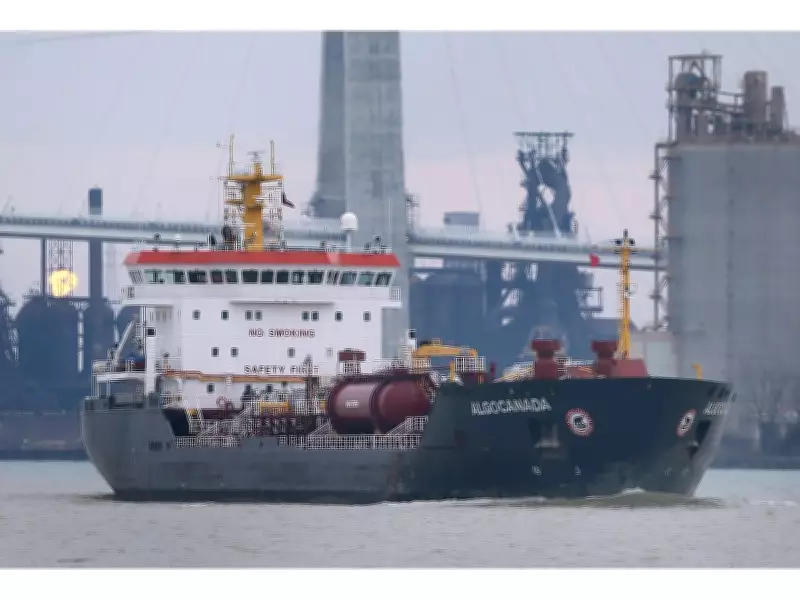
While global conflicts continue to disrupt international trade routes, Port Windsor has reported what its leadership describes as an "unprecedented" surge in demand for two of its key bulk commodities: grain and salt. The port's CEO highlighted that this remarkable increase, recorded in the latter part of last year, could significantly influence the dynamics of the upcoming shipping season across the Great Lakes region.
Record-Breaking Commodity Volumes
Between September and December, Port Windsor witnessed a substantial 24 percent rise in grain shipments, a figure that notably outpaced the nine percent average increase observed across all Great Lakes ports when compared to 2024 data. Even more striking was the surge in salt volumes, which skyrocketed by an impressive 98 percent at Windsor, far exceeding the regional gain of 33 percent.
"The big story in the Great Lakes this year was grain and salt," stated the port's CEO, Steve Salmons. "Both were up across the Great Lakes, and particularly in Port Windsor. Given that grain and salt are number one and two commodities out of our port, it was a good year for Port Windsor."

Diverging from East Coast Trends
Unlike many major ports on Canada's East Coast, such as Montreal, Halifax, and Saint John, which have benefited from increased cargo container traffic due to manufacturers rerouting shipments to avoid U.S. tariffs, Port Windsor's recent gains are firmly rooted in heightened demand for bulk commodities. Salmons emphasized that Great Lakes ports operate within distinct ecosystems compared to their oceanic counterparts.
"Montreal, Halifax and Saint John – they are benefactors from the tariff program in the United States right now, which is disrupting world trade," Salmons explained. At Port Windsor, however, the driving forces behind the surge are more directly tied to agricultural output and global geopolitical instability.
Global Conflicts Reshaping Supply Chains
The significant increase in grain shipments is attributed to a combination of a strong local harvest and ongoing global instability. Salmons pointed specifically to the war in Ukraine, a major global exporter of grain, which has severely interrupted international supply chains. This disruption has, in turn, created "a huge opportunity for grain sales worldwide," benefiting Canadian exporters.
Broader geopolitical pressures are also playing a critical role. Instability in the Middle East, including the ongoing conflict involving Iran, has led to restrictions at critical chokepoints like the Strait of Hormuz—a vital route for global oil and fertilizer exports. These restrictions have persisted for nearly four weeks, further straining global logistics networks.
Indirect Benefits for Canadian Ports
Though these conflicts are unfolding thousands of miles away, Salmons noted that the resulting supply chain interruptions can have a profound indirect impact on ports like Windsor. "There was a real rush with grain. It's a world commodity," he said. "It's a function of world demand and world commodity prices. The wars in the Middle East are not helpful."
He elaborated that disruptions in Middle Eastern supply chains increase pressure on remaining, more reliable trade routes. "Now, we don't ship through the Middle East, so it doesn't directly affect us, but indirectly, the fact that there's disruption in the Middle East means that world supply chains switch to more reliable chains, and that'll be Canada, for sure."
This shift underscores how regional conflicts can redirect global trade flows, positioning stable Canadian ports as attractive alternatives for shippers seeking consistency and reliability amidst international turmoil.