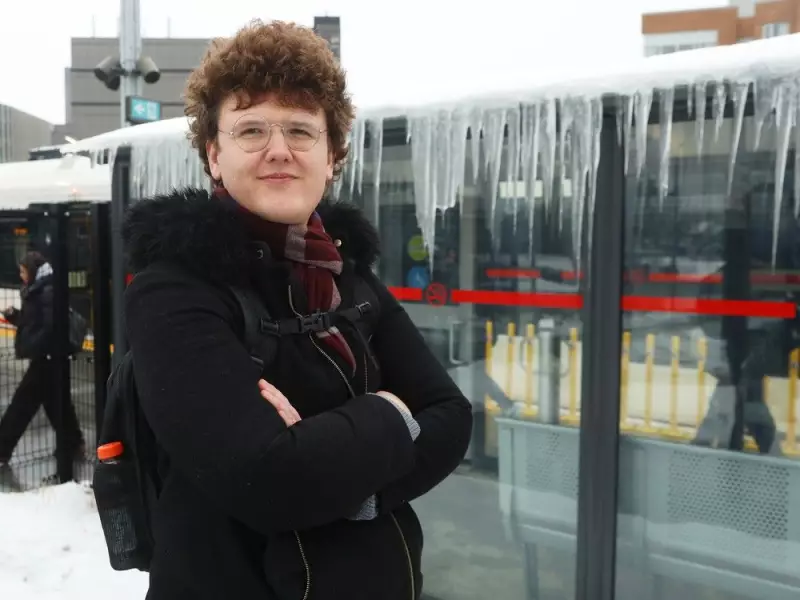
For Carleton University student Brooke Anderson, the daily commute from Kanata to campus is a battle against the cold. Relying on OC Transpo's buses and the O-Train, she frequently finds herself stranded at stops, waiting far longer than expected as frigid Ottawa temperatures bite.
"I was recently waiting for a bus that didn't arrive and my fingers were frozen," Anderson shared. "At the best of times, it's insult to injury, and at the worst of times it's an actual health issue."
System-Wide Reliability Failures
Anderson's experience is far from unique. Across the city, transit users are enduring similar hardships as OC Transpo continues to miss its reliability targets. The problem is exacerbated during winter months, when most of the system's thousands of bus stops offer little to no protection from the elements.

Currently, OC Transpo provides heat lamps at only a handful of major transit stations. This has sparked a debate: should the city invest in more heating infrastructure, or focus resources entirely on fixing the core service issues?
The Cost of Warmth vs. The Need for Service
City councillors are divided on the solution. River Ward Coun. Riley Brockington believes the priority must be addressing the root cause. "We have to increase the frequency of buses," he stated, adding that retrofitting portable shelters with heaters is likely not feasible.
Riverside South-Findlay Creek Coun. Steve Desroches echoed this sentiment, noting the impracticality of installing heat lamps at every stop. With over 2,000 bus shelters across Ottawa, Desroches said suburban riders consistently tell him that service expansion and reliability should come first.
The financial figures are significant. According to city spokesperson Katrina Camposarcone-Stubbs, installing a heating element at a stop costs between $600 and $1,200, depending on the kilowatt and voltage. Furthermore, the annual maintenance cost for OC Transpo's existing heat lamps ranges from $40,000 to $100,000, depending on annual replacement needs.
Shelter Design and a Driver's Perspective
Barrhaven East Coun. Wilson Lo, a former bus driver, agrees that improving bus service is the top priority. However, he suggests an intermediate step: exploring more shelters that are fully enclosed from ground to ceiling.
"The chief complaints that I get about our existing bus shelters is that the wind rips right through them," Lo explained. "We used to have bus shelters that were sealed around the bottom, and at some of our busier transit stations, we still have that."
This design flaw turns many shelters into wind tunnels, offering minimal respite from Ottawa's notorious winter chills. For riders like Brooke Anderson, the wait for a solution—whether it's a warmer shelter, a heat lamp, or simply a bus that arrives on time—continues, one cold commute at a time.