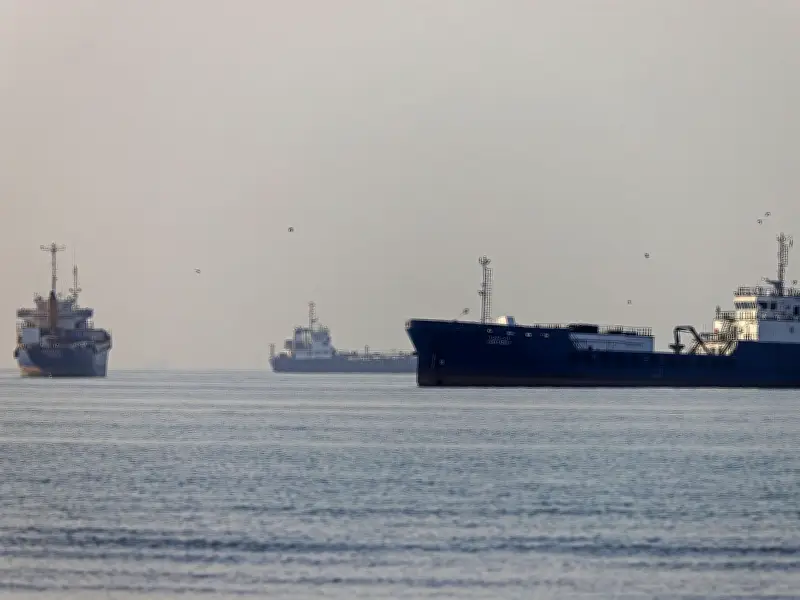
Benchmark U.S. oil prices dropped more than four per cent on Monday, pulling down Canadian energy stocks, as a conditional agreement between the United States and Iran triggered promises from President Donald Trump that the critical Strait of Hormuz will reopen.
Prices for West Texas Intermediate (WTI) crude fell more than $4 to close at US$80.75 a barrel on news the two sides in the war had reached a deal. Final details have yet to be disclosed, although it reportedly includes 60 days for the two countries to iron out key issues surrounding Iran's nuclear program.
Market Reaction and Expert Views
Industry executives and analysts predict it will take time for production in the Middle East — and global inventory levels — to return to pre-war levels.

“It feels like an overreaction to me, only because all this does is gives them 60 days to work on a deal,” Saturn Oil & Gas CEO John Jeffrey said Monday in an interview.
“There is a lot of hope right now that the strait is reopening, that the tide has turned, and it is very positive news. But it doesn't change the fact that we've been in this (situation) for four months now, and it's going to take time to replenish those inventories,” added ATB Financial chief economist Mark Parsons.
War Impact on Oil Supply
The war, which started at the end of February, effectively blocked shipments from the Strait of Hormuz, through which about 20 per cent of the world's oil and liquefied natural gas normally transits. Prices for WTI crude traded at $57 a barrel to start the year, but spiked above $112 a barrel in early April as energy infrastructure in the region was damaged.
Global oil output has decreased about 10 million barrels per day (bpd) from pre-war levels, said Al Salazar, vice-president of intelligence at energy analytics firm Enverus. The drop has made a dent on global oil inventories, which are down about half-a-billion barrels since the war began.
“It sounds very, very constructive and positive, but that said, it hasn't changed the supply-demand balance,” Salazar said Monday about reports of a U.S.-Iran agreement.
“Prices will start to grind higher as there's a realization that we're dealing with a low stock situation; shortages still may occur over the summer driving season.”
He expects Brent crude prices will average about $110 a barrel through the rest of the year, with WTI oil trading about $5 below that level.
Canadian Energy Stocks Dip
On Monday, share prices in many Canadian oil and gas stocks headed lower as crude prices stumbled. The S&P/TSX Capped Energy Index fell about 2.7 per cent on the day, although it's still up 34 per cent since the start of the year. The broader S&P/TSX composite index ended Monday up almost one per cent, climbing more than 337 points.
Petroleum producers have reacted cautiously to higher prices this year, given the uncertainty over how long energy flows would be disrupted.
“Even with what's happened (with the deal), it doesn't change our view that we're in for a period of structurally higher oil prices,” said ATB Financial chief economist Mark Parsons.