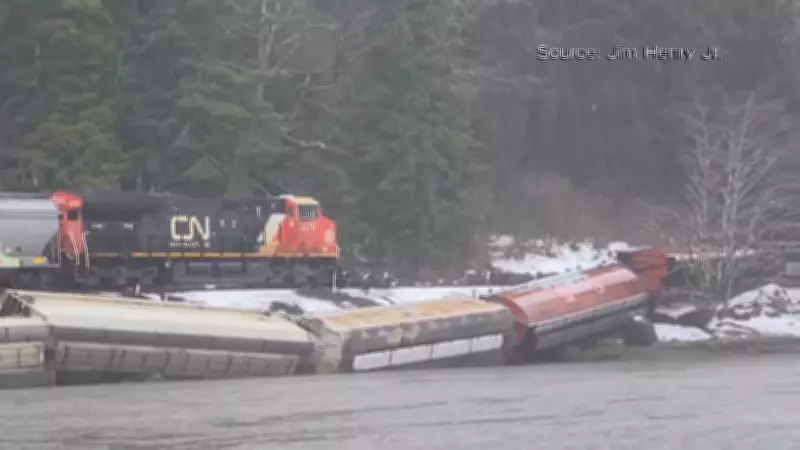
Major Mudslide Derails Freight Train, Disrupts Key Port Rail Link
A substantial mudslide has caused a freight train to derail along the Skeena River in British Columbia, resulting in the immediate shutdown of the crucial rail line that serves the Port of Prince Rupert. The incident, which occurred recently, involved a locomotive and several rail cars being knocked off the tracks by the slide.
Infrastructure Impact and Regional Consequences
The closure of this essential rail corridor is expected to cause significant disruptions to freight operations at the Port of Prince Rupert, a major gateway for Canadian exports and imports. This event highlights the persistent challenges faced by transportation infrastructure in British Columbia's rugged and environmentally sensitive regions, where landslides and extreme weather can pose serious risks to rail safety and economic activity.
Emergency response teams have been deployed to the site to assess the damage and begin recovery operations. Authorities are working to clear the debris and restore service, but no timeline for reopening the line has been provided yet. The derailment underscores the need for ongoing investment in resilient infrastructure to mitigate such risks in the future.

Broader Context of Transportation Vulnerabilities
This incident is not isolated, as British Columbia has experienced similar disruptions in the past due to natural events. The Skeena River corridor is particularly prone to geological hazards, making rail maintenance and monitoring a critical priority for ensuring the reliability of supply chains.
- The Port of Prince Rupert is a key economic hub, handling millions of tons of cargo annually.
- Rail service interruptions can lead to delays in shipping, affecting industries from agriculture to manufacturing.
- Environmental factors, such as heavy rainfall or thawing, often contribute to landslide risks in this area.
Officials are urging caution and advising stakeholders to prepare for potential logistical challenges as recovery efforts continue. The incident serves as a stark reminder of the interplay between environmental forces and economic infrastructure in Canada's western provinces.