Montreal Warns of Worsening Pothole Crisis, Announces New Repair Measures
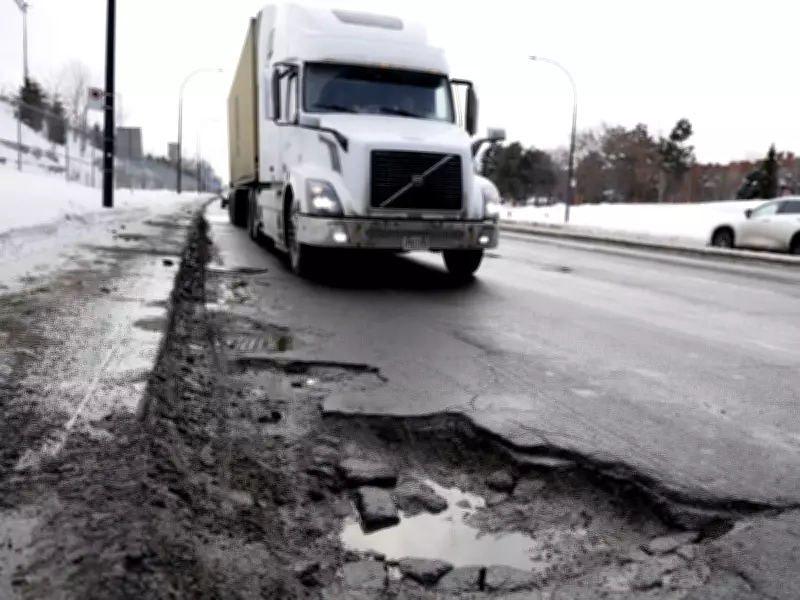
The city of Montreal has issued a stark warning about its ongoing pothole problem, stating that the worst is yet to come as spring approaches. While announcing new measures to address the issue, officials cautioned that residents should brace for a particularly difficult season ahead.
New Equipment and Teams Coming Next Year
In response to a record number of complaints, the city revealed plans to purchase two new automated pothole-repair machines and create two specialized blue-collar worker teams dedicated to road maintenance. However, both initiatives will only become operational next year, leaving the immediate spring thaw period largely unaddressed by these new resources.
"I don't have a magic wand. I can't buy two pothole-repair machines on Amazon. It takes time," Mayor Soraya Martinez Ferrada stated during a Friday announcement. "But we want to make sure we're doing as much as we can."

Immediate Challenges and Temporary Solutions
Executive committee chair Claude Pinard acknowledged the limitations of current approaches, describing winter pothole patching as a "Band-Aid fix" that fails to provide long-term solutions. "The winter has been pretty hard on our network," Pinard explained. "And with spring on the way and warmer weather approaching, the worst is yet to come — that's why we must act now."
The city has allocated an additional $6 million toward addressing potholes through various measures. Last month, Montreal awarded 10 privately negotiated contracts to companies for manual street repairs over eight days, resulting in approximately 15,000 potholes being patched during that emergency blitz.
Equipment Reliability Concerns
The new pothole-repair machines will expand the city's fleet to six units, but blue-collar workers have raised concerns about their reliability. Workers report that the machines are fragile and frequently out of service. As of the announcement date, two machines remained in garages for repairs, though Pinard indicated they should return to service within two weeks.
New Expertise Centers and Summer Paving Plans
The two new "expertise centers" will consist of 24 newly hired blue-collar workers focused on maintaining the city's main streets. According to Pinard, these teams will help the city better understand pothole issues, predict costs, and avoid unsuccessful calls for tenders that have plagued previous efforts.
One reason for last month's emergency contracts was the city's inability to secure its usual mechanical pothole-patching contract through normal bidding processes. The city issued two calls for tenders but found no bidders meeting its criteria, particularly regarding temperature guarantees for the work.
"With the new units, we should avoid those problems in years to come," Pinard stated optimistically.
The city also announced plans to resurface 67 kilometers of streets this summer, targeting problematic areas including Notre-Dame St. E., Papineau Ave., Louis-H.-La Fontaine Blvd., Sherbrooke St. E., and Pierre-Dupuy Ave. Notably, Mayor Martinez Ferrada suffered two flat tires on Notre-Dame St. E. in February, highlighting the severity of conditions on that particular roadway.
Political Response and International Exploration
Mayor Martinez Ferrada made her announcement while in South Korea, where she was concluding her first international economic mission since being elected in November. Part of her mission involved exploring innovative approaches to pothole repair and snow removal techniques.
"It's a combination of several solutions," Martinez Ferrada explained regarding fixing Montreal's streets. "There isn't one solution that will make all potholes disappear in Montreal."
During her trip, the mayor met with a startup that has developed an additive derived from starfish that could help reduce corrosion caused by road salt.

The opposition party Projet Montréal welcomed the announcement while noting that the planned 67 kilometers of resurfacing falls short of their proposed 75 kilometers. Infrastructure critic Sylvain Ouellet emphasized that "The key to success is paving roads in the summer," suggesting that focusing solely on pothole filling would yield only mixed results.