Transit Advocates Sound Alarm as REM Service Failures Persist
Frustration is mounting among commuters as Montreal's Réseau express métropolitain (REM) light-rail system experienced its second major network-wide disruption in less than a week. The latest outage occurred on Tuesday morning, halting all service for approximately an hour and forty-five minutes during peak commuting hours.
Broken Promises and Winter Woes
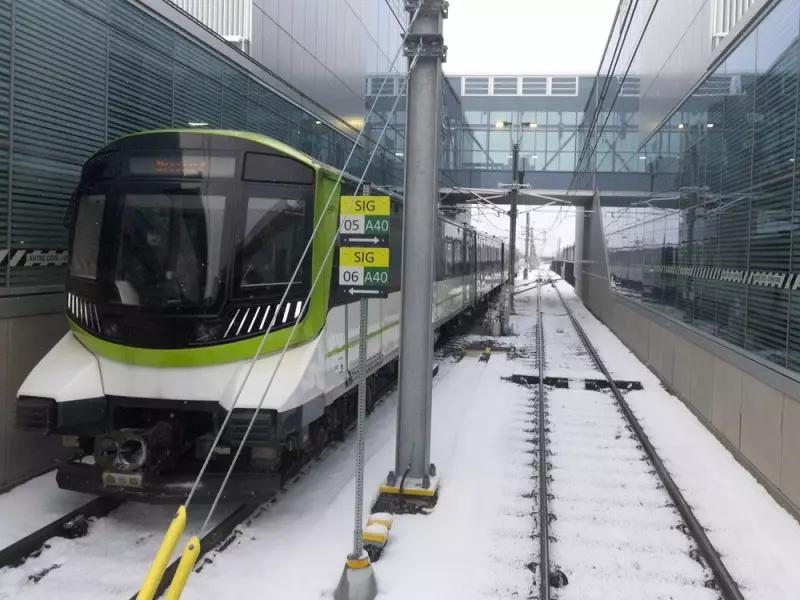
Despite assurances from operators that lessons had been learned from last winter's reliability issues, the REM continues to struggle with weather-related disruptions. Tuesday's shutdown was attributed to snow infiltration that disabled two trains, forcing them to be manually operated and removed from service. During this process, all other trains in the network were limited to maximum speeds of just 10 km/h.
"People are becoming exasperated," stated Philippe Jacques, co-director general of transit advocacy group Trajectoire Québec. "We thought that the operator had learned from its errors, but that doesn't seem to be the case."

The timing is particularly problematic as this follows another service halt just last Thursday, which operators blamed on snow and ice accumulation on power cables. These repeated failures come despite explicit promises of improved winter reliability when the system's Deux-Montagnes branch opened in November 2025.
Commuters Left in the Cold
The human impact of these disruptions was starkly evident on Tuesday morning as hundreds of commuters waited outside in frigid temperatures for shuttle buses that took nearly an hour to arrive. Maxime Laliberté, spokesperson for REM operator Pulsar, acknowledged the issues and indicated that waterproofing improvements would be made to all trains in coming days.
However, Jacques emphasized that such technical fixes offer little immediate comfort to stranded passengers. "When it works well, which is the majority of the time, it is a game changer," he acknowledged, while noting that significant delays of twenty minutes or more occur at least twice weekly since November.
Calls for Immediate Contingency Measures
Trajectoire Québec is urging the Autorité régionale de transport métropolitain (ARTM) to implement several emergency measures:
- Establish parallel bus services as soon as possible
- Delay the planned February 2 elimination of shuttle buses serving the Deux-Montagnes line
- Improve communication protocols during service disruptions
Communication failures compound the physical service problems, according to Jacques. Passengers often wait several minutes before receiving any announcement about outages, and updates via loudspeakers, text messages, and social media platforms are infrequent and lack crucial details about causes and expected resolution times.
Broader Implications for Public Transit
The reliability concerns extend beyond immediate commuter inconvenience. Jacques warned that the REM's performance could influence future transit investment decisions across Quebec. "We have a winter climate, and we want to have more transit projects financed," he explained, citing proposed projects like Quebec City's tramway and eastern Montreal transit expansion. "This has to work so that people think that it's worth it to invest in public transit."
Some critics had previously questioned whether the REM's technology could withstand Montreal's harsh winters, pointing to similar challenges with Ottawa's Confederation Line. While Jacques isn't ready to dismiss the technology entirely, he acknowledges the high stakes involved in proving its reliability.
Commuters Weigh Their Options
Despite the problems, the REM continues to attract substantial ridership, with parking lots at stations like Sunnybrooke remaining full even during disruptions. However, some regular users are reconsidering their transportation choices.

Lianne Trigiani, a Université de Montréal research associate from Dollard-des-Ormeaux, expressed mixed feelings about the system. "It would be nice if I can get there consistently on time," she said, noting that her laboratory work requires coordination with colleagues. "The few times I have used it, when it was working, it was incredible. But I also had issues when I was sitting on the train for 20 minutes."
Trigiani's experience highlights the practical consequences of unreliable service—when she arrives late, multiple people's work schedules are disrupted, creating professional complications beyond mere inconvenience.
As Montreal continues to expand its public transit network, the REM's growing pains raise important questions about winter preparedness, contingency planning, and the communication strategies essential for maintaining public confidence in major infrastructure investments.