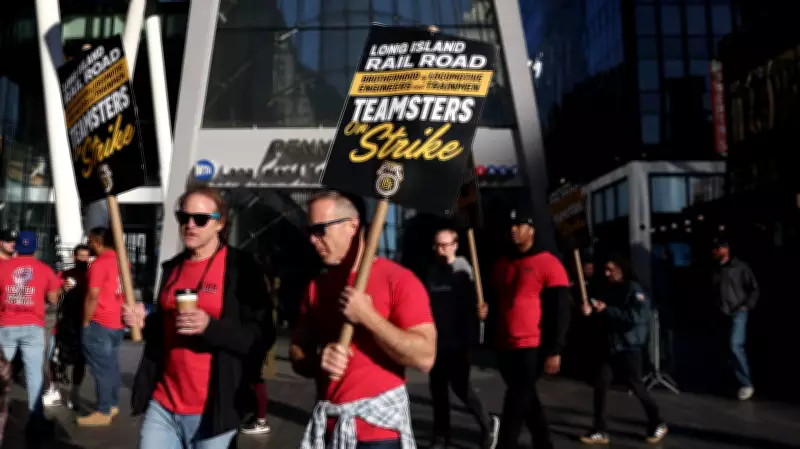
The Long Island Rail Road (LIRR), North America's largest commuter rail system, ceased operations early Saturday morning after five unions representing roughly half of its workforce went on strike. The walkout, the first since a two-day strike in 1994, began at 12:01 a.m. after months of negotiations failed to produce a new contract.
Negotiations Stalled
Kevin Sexton, National Vice President of the Brotherhood of Locomotive Engineers and Trainmen, stated that no new negotiations have been scheduled. "We're far apart at this point," Sexton said early Saturday. "We are truly sorry that we are in this situation." The unions, representing locomotive engineers, machinists, signalmen, and other workers, have been pushing for higher wages to keep pace with inflation and rising living costs.
Janno Lieber, chairman of the Metropolitan Transportation Authority (MTA), countered that the agency had offered the unions everything they requested in terms of pay. "They always intended to walk out," Lieber said, suggesting that the strike was premeditated.

Impact on Commuters and Events
The shutdown is expected to cause significant disruptions, particularly for sports fans planning to attend weekend games between the New York Yankees and New York Mets, as well as the NBA's New York Knicks playoff run at Madison Square Garden. Both venues have dedicated LIRR stops. If the strike continues beyond the weekend, the system's 250,000 weekday riders will need to find alternative routes into Manhattan, likely leading to increased congestion on the region's already crowded roads.
Rich Piccola, an accountant who commutes from Long Island, expressed concern: "People are still going to commute, but if everybody starts driving now, the traffic is only going to get worse."
Government Response
New York Governor Kathy Hochul, a Democrat facing reelection later this year, urged Long Islanders to work from home if possible. The MTA announced limited shuttle bus service to New York City subway stations, but this contingency plan is not designed to handle the full volume of regular riders. Lisa Daglian, executive director of the Permanent Citizens Advisory Committee to the MTA, noted that remote work is not an option for many, including construction workers, healthcare professionals, and school staff.
Labor relations expert William Dwyer of Rutgers University suggested that the political pressure on Hochul could push the MTA to resolve the strike quickly. "She's up for reelection, and Long Island is a critical vote for her," Dwyer said. "If there's a significant fare hike, that does not bode well for her on Election Day."
Root Causes
The contract dispute centers on salaries and health care premiums. The MTA argued that the unions' initial demands would necessitate fare increases and could affect negotiations with other unionized workers. Gerard Bringmann, chair of the LIRR Commuter Council, warned that any pay raises for workers could lead to higher fares for riders. "Like the union workers, we too are burdened by the increase in the cost of living here on Long Island," he said.
As the strike continues, both sides remain at an impasse, with no new talks scheduled. The disruption underscores ongoing tensions between labor demands for fair compensation and the financial constraints of public transit agencies.