Quebec Disability Advocacy Group Challenges Court Decision on Transit Accessibility
A prominent disability rights organization in Quebec has launched an appeal against a Superior Court ruling that sided with regional transit agencies in a significant class-action lawsuit concerning accessibility for people with mobility challenges.
Legal Battle Over Public Transit Discrimination Claims
This week, legal representatives for Regroupement des activistes pour l'inclusion au Québec (RAPLIQ) formally filed a notice of appeal regarding the class-action lawsuit originally heard in 2023. The lawsuit alleged that multiple transit agencies systematically discriminated against individuals with disabilities by failing to provide adequate accessibility options across their networks.
The legal action specifically highlighted several critical deficiencies:

- Insufficient investment in accessible stations on Exo's suburban train network
- Unacceptably slow progress in installing elevators within the STM's métro system
- Excessive wait times for booking essential paratransit services
The lawsuit encompassed any Quebec resident who encountered accessibility barriers when using métros, city buses, commuter trains, or paratransit services due to physical disabilities after April 15, 2012. RAPLIQ sought substantial compensation through the courts, requesting $50,000 in moral damages and $25,000 in punitive damages for each affected individual.
Court Ruling and Advocacy Group's Response
Last month, the Superior Court ruled against RAPLIQ, determining that transit agencies had acknowledged accessibility concerns and were investing resources to the best of their capabilities within constrained budgetary limitations.
However, RAPLIQ leadership strongly contests this assessment. Steven Laperrière, the organization's director general, argues that accessibility initiatives consistently receive lower priority than other infrastructure projects. This pattern has become particularly evident through recent budget reductions affecting capital programs at both STM and Exo.
"As soon as there is a budget cut to be made, it is done on the backs of people with disabilities," Laperrière stated during a recent telephone interview. "But what also shocks me is the 'who cares' attitude. This attitude really frustrates me."
Specific Accessibility Shortcomings Documented
The appeal documents reveal several concerning developments regarding transit accessibility in the Montreal region:
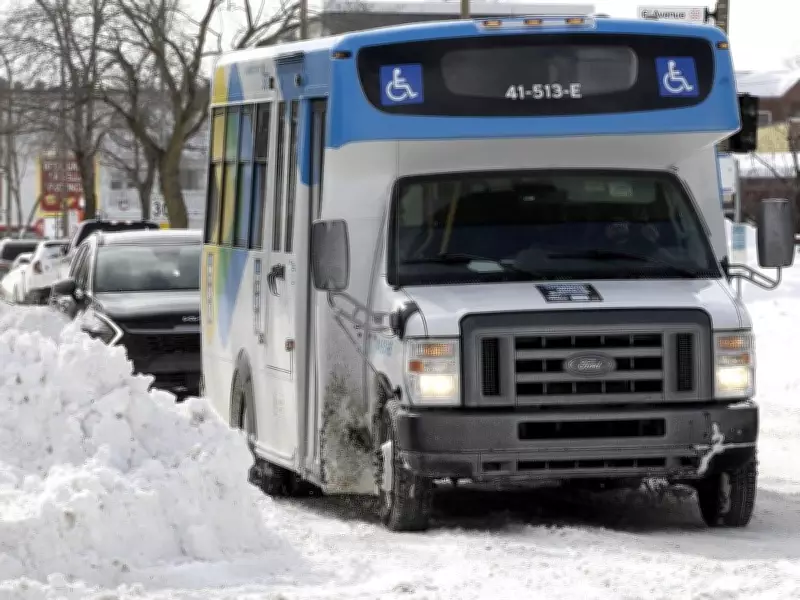
- Paratransit Service Reductions: The STM recently implemented cost-saving measures by eliminating its minibus fleet and subcontracting paratransit services to private providers, a move expected to save $8 million annually. Laperrière warns this could lead to service reductions by 2027, potentially creating situations where individuals might reach destinations but lack return transportation.
- Elevator Installation Delays: The STM has significantly fallen behind its elevator installation targets. Currently, only 29 of 68 métro stations feature elevators, with just one additional project underway at Édouard-Montpetit station. Original goals called for 41 accessible stations by 2025, later extended to 2030, but current capital plans include no new elevator installations for the next decade.
- Regional Accessibility Cancellations: Exo has cancelled multiple plans to enhance accessibility at train stations over recent years. Most regional buses continue operating with private-sector coaches that cannot accommodate wheelchairs, with even parents required to store strollers in cargo holds during travel.
Transit Authority's Position and Future Planning
In response to accessibility concerns, the Autorité régionale de transport métropolitain (ARTM), which governs and allocates funding to regional transit agencies, issued a statement emphasizing their commitment to "providing the best service possible with available resources."
ARTM spokesperson Maxime Duchesne highlighted several initiatives:

- Consolidation of four adapted transit services under a single metropolitan agency
- Establishment of a working group involving transit agencies and non-profit organizations to develop an accessibility roadmap
- Integration of universal accessibility considerations into major infrastructure projects including the SRM PIE-IX, Blue Line extension, and REM network
Despite these planned initiatives, RAPLIQ maintains that without substantial funding increases and genuine prioritization of accessibility projects, discrimination against transit users with disabilities will persist throughout Quebec's public transportation networks.