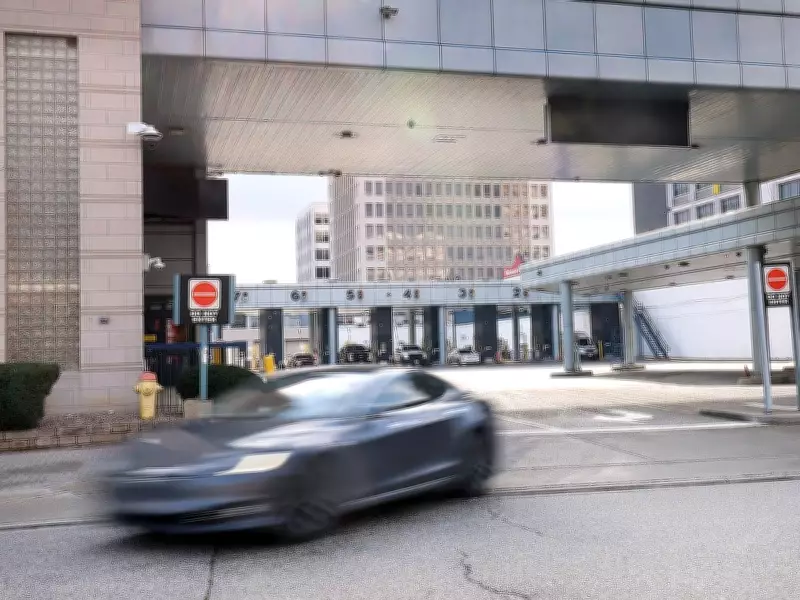
The Detroit-Windsor Tunnel, a vital international crossing connecting Michigan and Ontario, will be temporarily closed this Sunday morning to facilitate critical emergency preparedness drills. This annual exercise is scheduled from 6 a.m. to 10 a.m., temporarily limiting travel between Detroit and Windsor during that period.
Cross-Border Collaboration for Safety
These emergency response exercises represent a significant collaborative effort between Canadian and American agencies. Windsor Fire and Rescue crews, Essex-Windsor Emergency Medical Services personnel, Windsor police, and Canadian Border Service Agency members will work alongside their Detroit counterparts, including Detroit police, Detroit fire departments, Homeland Security personnel, and Detroit-Windsor Tunnel staff.
The planned mock emergency scenario is designed to test and refine coordinated response procedures that would be implemented in the unlikely event of an actual emergency situation at the tunnel.

Official Statements on Exercise Importance
Tal Czudner, chief executive of Windsor Detroit Borderlink Ltd., which operates the Canadian side of the tunnel, emphasized the critical nature of these exercises. "The planned exercise is a vital part of the Tunnel's emergency response procedures," Czudner stated.
"In the unlikely event that an emergency occurs, both sides of the border will be prepared to handle the situation safely and efficiently," Czudner added in an official statement. "With closer scrutiny being paid to border security, this test represents an essential assessment of our operational readiness."
Alternative Routes and Historical Context
During the four-hour closure period, cross-border traffic will be redirected to alternative routes, with the Ambassador Bridge serving as the primary alternative for vehicles needing to cross between the United States and Canada.
The Detroit-Windsor Tunnel represents a significant piece of North American infrastructure with a rich history. Construction on the underwater passage began in 1928 at a cost of $23 million, with formal dedication occurring on November 1, 1930. U.S. President Herbert Hoover symbolically turned a "golden key" in Washington to open the tunnel for public use, marking the beginning of nearly a century of service.
Operational Significance and Management
As one of North America's busiest border crossings, the Detroit-Windsor Tunnel handles approximately 12,000 vehicles daily, totaling over four million vehicles annually. According to tunnel officials, approximately 98 percent of this traffic consists of passenger vehicles.
The tunnel operates under a unique management structure as a joint venture between Windsor and Detroit. Windsor Detroit Border Link manages operations on the Canadian side, while the Detroit Tunnel oversees operations on the American side. This cooperative arrangement reflects the international nature of the infrastructure.
On the tunnel's 95th anniversary in November 2025, Czudner highlighted the economic benefits of the crossing, noting that the city of Windsor receives an annual dividend from the tunnel corporation. In 2025, this dividend amounted to $1.5 million, demonstrating the financial significance of the tunnel to the local community.
The tunnel is scheduled to reopen for normal operations at 10 a.m. on Sunday following completion of the emergency exercises. These drills represent ongoing efforts to ensure the safety and security of one of North America's most important international border crossings.