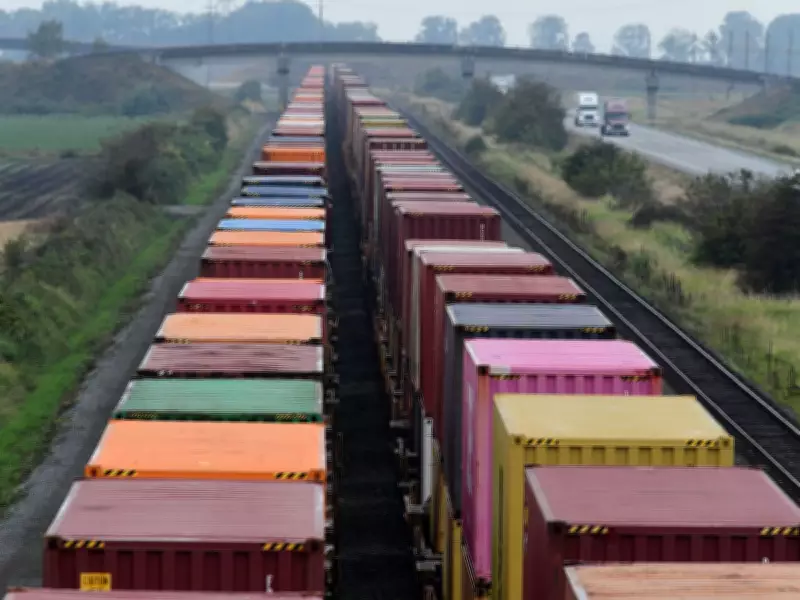
One of Canada's two major railways has again exceeded Ottawa's grain revenue cap, reigniting a decades-old dispute that is becoming harder to dismiss as routine regulatory friction. The Canadian Transportation Agency ruled that Canadian Pacific Kansas City (CPKC) surpassed its maximum revenue entitlement (MRE) for the most recent crop year, resulting in a $2.8 million penalty. This mechanism, introduced in 2000, limits how much CPKC and Canadian National Railway (CN) can earn from shipping grain, with excesses triggering financial penalties. In 2008, CN received the largest penalty at over $47 million.
The Purpose and Evolution of the MRE
Designed to constrain railway market power and provide predictable freight costs for Prairie producers in a system with limited competition, the MRE has remained structurally intact for 25 years. However, the surrounding environment has changed dramatically. Farm groups argue that the MRE is one of the few meaningful constraints on two dominant railways controlling access to export corridors. They cite findings from Canada's Grain Monitor, which show that rail freight from Saskatoon to Vancouver can cost more than twice the cost of moving grain across the Pacific to Yokohama, including port fees. Such differentials would raise serious questions about pricing power in any other sector.
Efficiency Gains Not Passed Through
Growers also contend that efficiency gains have not been passed through to lower freight costs. The number of grain elevator sites has fallen by roughly 60% since the MRE was introduced, while unit trains and loop-track loading systems have made rail operations faster and more efficient than originally anticipated. Yet these improvements have not translated into reduced costs for shippers.

The Railways' Perspective
The railways have pushed back, arguing they should be allowed to price grain movement like any other commodity. They warn that revenue caps distort investment in a capital-intensive industry where locomotives, hopper cars, and terminals are long-term assets. A tight cap changes how capital gets allocated. They also point to geography: moving grain 1,200 kilometres from Saskatoon to Vancouver through sleet, snow, and the Rockies is not comparable to shorter export routes in countries like Brazil or Australia. Canadian grain rates, they add, already come in below U.S. benchmarks.
System Strain and Capacity Issues
But the issue is not price alone; it is whether the system is straining under pressure. The Grain Monitor shows freight rates rise during harvest when demand peaks, then fall later in the year. Railways describe this as normal seasonality, but that logic sits uncomfortably with the reality that Canada's grain system constantly runs near its limits. At Vancouver's port, grain ships can sit at anchor in English Bay for weeks waiting to load, sometimes months. RBC estimates Canada's share of global agricultural markets has slipped from fifth to seventh since 2000, with further declines possible if structural constraints persist. These are signs of a system absorbing more pressure than it was designed to handle.