Canada's Investment in the Gordie Howe Bridge: Funding Without Full Ownership
A significant clarification has emerged regarding the financing and ownership structure of the Gordie Howe International Bridge, the vital new crossing connecting Windsor, Ontario, and Detroit, Michigan. While Canadian taxpayers have indeed funded the massive infrastructure project, the bridge is not solely owned by the Canadian government. Instead, it operates under a complex public-private partnership model that involves multiple stakeholders.
The Funding Structure Behind the Border Crossing
The Canadian government has invested billions of dollars into the construction of the Gordie Howe International Bridge, making it one of the largest infrastructure projects in recent Canadian history. This substantial financial commitment from Canadian public funds has been essential to bringing the long-planned crossing to fruition. However, contrary to what some might assume, this investment does not translate to exclusive Canadian ownership of the completed structure.
The bridge's development and operation follow a public-private partnership framework, where private sector entities participate alongside government agencies. This arrangement means that while Canada provided the capital for construction, ownership and operational responsibilities are shared with private partners who contributed expertise, additional financing, and long-term management capabilities.

Implications of the Partnership Model
This ownership structure has several important implications for how the bridge will function throughout its operational lifespan. The public-private partnership model typically involves revenue-sharing arrangements, where tolls collected from bridge users are distributed between the government and private partners according to predetermined agreements. This approach allows Canada to leverage private sector efficiency while maintaining public oversight of a critical transportation asset.
The arrangement also means that decision-making authority regarding bridge operations, maintenance schedules, and future improvements is distributed among the partnership members rather than resting solely with Canadian government officials. This collaborative approach to infrastructure management represents a modern trend in how major public works projects are financed and administered in Canada and internationally.
Context and Background
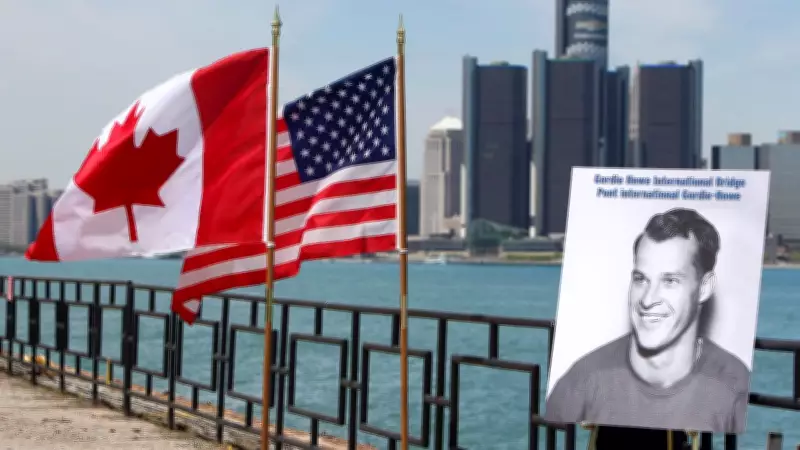
The Gordie Howe International Bridge, named after the legendary Canadian hockey player, represents a crucial enhancement to cross-border trade and travel between Canada and the United States. The announcement that the Detroit River International Crossing would bear Howe's name occurred in Windsor, Ontario, in May 2015, highlighting the project's significance to Canadian identity and international relations.
Recent developments in the construction sector have added complexity to the project's execution. A Canadian construction firm previously involved in bidding for bridge construction and operation has withdrawn from consideration due to potential acquisition by a Chinese state-owned company. This change underscores the dynamic nature of large-scale infrastructure projects and the importance of stable partnership arrangements in ensuring their successful completion.
The bridge's funding and ownership structure serves as a case study in contemporary infrastructure development, demonstrating how governments can finance essential projects while sharing ownership and operational responsibilities with private sector partners. This model balances public investment with private sector efficiency, creating a framework that other major infrastructure initiatives may follow in the future.