Calgary Police Commission Advocates for Photo Radar Reinstatement on Key Highways
In response to a concerning rise in speeding violations and fatal traffic incidents, the Calgary Police Commission is taking formal action to advocate for the return of automated speed enforcement on two of the city's busiest provincial highways. The commission plans to send a letter to the Alberta government urging the reinstatement of photo radar on Stoney Trail and Deerfoot Trail, where recent data shows alarming safety trends.
Escalating Speeding and Fatal Collisions Prompt Action
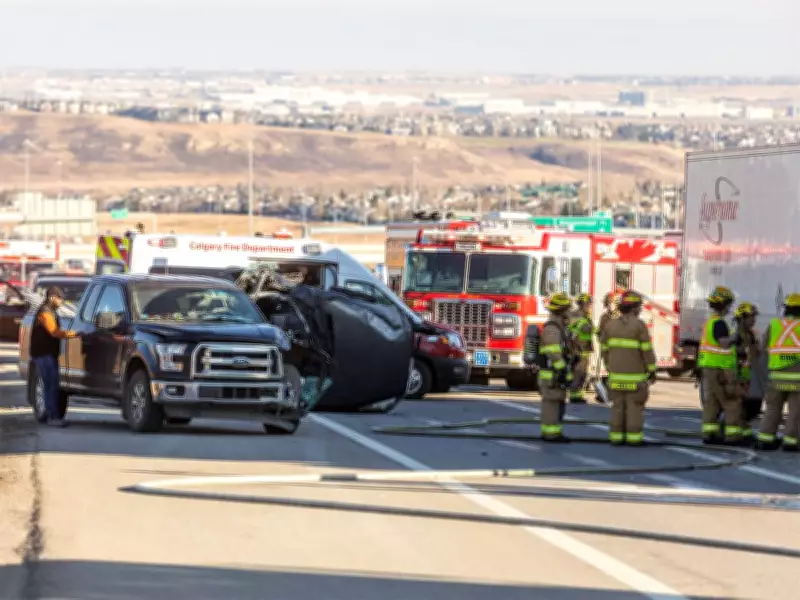
During Wednesday's regular commission meeting, members reviewed troubling statistics that have emerged since the provincial government halted photo enforcement on all provincial highways in December 2024. Police officials presented data showing that last year alone, officers issued 493 tickets to motorists driving 51 kilometres or more over the posted speed limits on Stoney and Deerfoot Trails. More disturbingly, these highways witnessed eleven fatal collisions during that period, with seven deaths occurring on Stoney Trail and four on Deerfoot Trail.
"It'd be crazy not to think there's a correlation with the absence of photo radar," stated Deputy Chief Cliff O'Brien, emphasizing the connection between the removal of automated enforcement and the increase in dangerous speeding behavior. Commission member Kelly Ogle expressed similar concern, remarking, "I'm just dumbfounded" by the situation.

Provincial Policy Changes and Their Impact
The Alberta government's decision to eliminate photo radar from provincial highways reduced the number of camera sites throughout the province by 70 percent by April 2025. While provincial officials argued that photo radar primarily served as a revenue generator rather than a safety tool, and redirected enforcement focus to school zones, playgrounds, and construction areas, Calgary police have strongly criticized this policy shift.
Police officials contend that removing automated enforcement from major highways has created significant operational challenges, pulling officers away from other essential duties to manually monitor speeding on these busy corridors. More importantly, they argue this change has compromised public safety on roadways that see heavy daily traffic volumes.
Statistical Evidence Supports Photo Radar Effectiveness
Calgary police have compiled compelling data demonstrating the effectiveness of photo radar in reducing collisions and saving lives. According to their analysis, automated enforcement devices have been associated with:
- A 33.4 percent reduction in overall collisions
- A 75 percent decrease in fatal collisions
- A 55.7 percent decline in injury crashes
These statistics gain particular significance when viewed alongside broader traffic safety trends in Calgary. The city experienced a ten-year high in traffic fatalities during 2025, with 23 motorist deaths and 15 pedestrian deaths recorded throughout the municipality.
Moving Forward with Safety Conversations
Calgary Police Chief Katie McLellan addressed the commission with sobering observations about the current situation. "We've got many people dying on our streets," she stated during Wednesday's meeting, highlighting the urgency of addressing roadway safety concerns.
The commission's planned letter to the provincial government represents a formal step in ongoing discussions about reinstating automated enforcement on Calgary's provincial highways. Chief McLellan indicated that several preliminary conversations have already taken place with various stakeholders, with hopes of advancing more substantive discussions with Alberta government officials in the near future.
This initiative reflects growing concern among law enforcement professionals and community leaders about balancing efficient traffic enforcement with comprehensive public safety measures on some of Alberta's most heavily traveled roadways.