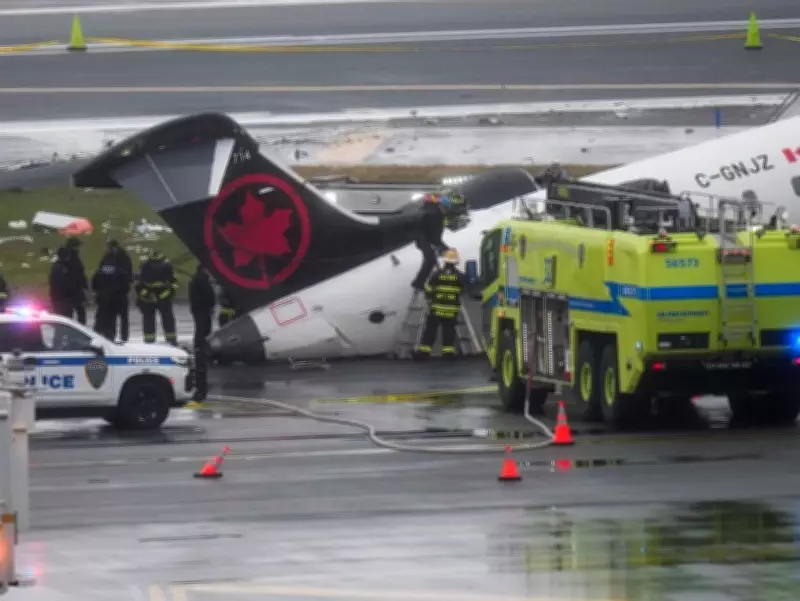
Both the data and voice recorders from the ill-fated Air Canada Express aircraft that collided with a fire truck at New York's LaGuardia Airport have been successfully recovered by investigators. The crash occurred on Sunday night, March 22, 2026, when the plane, after landing, struck a Port Authority fire truck on an active runway, raising immediate questions about airport safety protocols and air traffic control procedures.
Recovery of Critical Evidence
The retrieval of the black boxes marks a crucial step in the investigation into the tragic incident. These devices are expected to provide vital insights into the final moments before the collision, including cockpit communications and flight data. As authorities piece together the sequence of events, a primary focus remains on understanding how and why the fire truck was granted clearance to cross the runway directly in the path of Flight 8646.
History of Safety Concerns at LaGuardia
This collision is not an isolated event but rather part of a troubling pattern at LaGuardia Airport. According to reports from U.S. media outlets, pilots have voiced significant safety concerns over the past two years, citing an unsustainable operational tempo. One pilot, in a report to NASA's Aviation Safety Reporting Program, compared the airport's busy conditions to those at Ronald Reagan National Airport in Washington, D.C., prior to a fatal accident there in January 2025.

Recent incidents at LaGuardia include:
- A collision between two Delta-owned Endeavour Air regional jets on a taxiway just five months ago, resulting in damage to both aircraft and injuries to a crew member.
- A near-miss in May 2025, where an air traffic controller cleared a Republic Airways jet for takeoff while a United Airlines plane was still on the runway, forcing an abrupt abort.
Expert Analysis and Calls for Improved Safety
Aviation attorney Robert A. Clifford, founder of Clifford Law Office, emphasized that preliminary information suggests the crash may stem from an error by LaGuardia tower controllers. He highlighted the urgent need for enhanced air traffic control and ground vehicle management systems to prevent such accidents. "The FAA and others in the aviation industry must learn from these mistakes and develop better and more redundant means of preventing these ground accidents," Clifford stated, noting factors like reduced visibility and fatigue during late-night operations.
Clifford also referenced historical precedents, such as the 1984 Aeroflot crash in the Soviet Union that killed 178 people due to a runway collision with maintenance vehicles, and a 2022 incident in Lima, Peru, where a fire truck collision led to fatalities. These cases underscore the global relevance of improving airport ground safety measures.
Ongoing Investigation and Future Implications
As the National Transportation Safety Board continues its investigation, the recovery of the black boxes will be instrumental in determining liability and guiding future safety enhancements. The incident has reignited debates over airport infrastructure, controller workload, and the implementation of advanced technologies to mitigate human error. With LaGuardia's operational pace under scrutiny, stakeholders are calling for comprehensive reviews to ensure such tragedies are not repeated, prioritizing passenger and crew safety in an increasingly congested aviation environment.