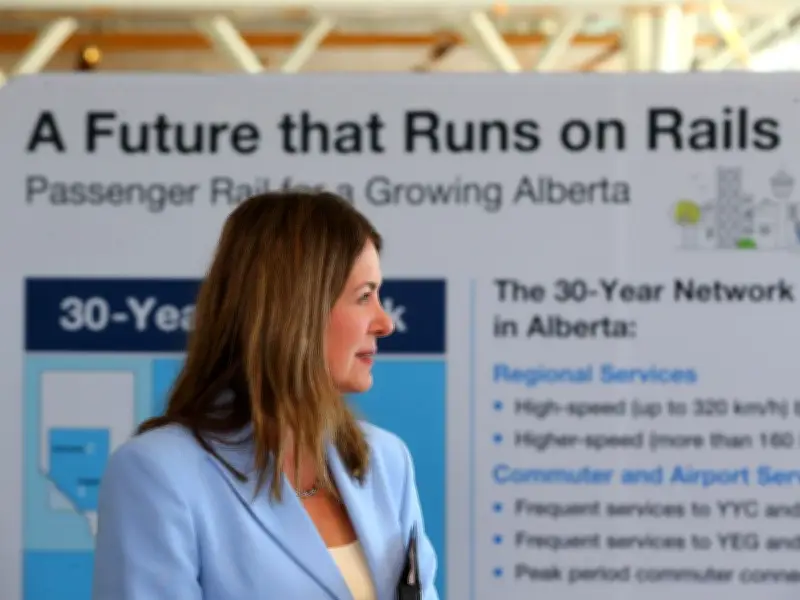
Governments often struggle to look beyond the next election cycle, but Alberta deserves credit for developing a generational plan to restore passenger rail service. The province hasn't seen a daily transcontinental train in 36 years or meaningful intercity rail within its borders in 41 years.
Current commitments and timelines
Last week, the government reiterated its commitment, highlighting the $15 million allocated in the 2026 budget for initial steps to revive trains between Calgary and Edmonton, with connections to their international airports. Plans also include rail services linking these cities with surrounding communities, serving as a backbone for further services to other large centers and tourist destinations like Banff National Park.
However, these ambitious goals lack ambitious timelines. The project is expected to take 30 to 60 years to complete. Many of us will not see the result, which underscores the need for more focus and urgency.

Comparison with highway projects
Such extended timelines would never be accepted for highway projects. For instance, Deerfoot Trail in Calgary has received upgrades over several years at considerable expense, not decades. Similarly, Calgary's ring road, Stoney Trail, opened in sections between 2009 and 2021 once the province committed to completion. Even urban rail transit, like the CTrain, expanded rapidly between 2003 and 2014, with the west extension of the Blue Line opening in 2012. The Green Line LRT's initial section is expected to take only six years, with a projected opening in 2031.
International examples
Building a provincial rail network from scratch is a larger scale, but big rail projects can be done relatively quickly. In France, the original TGV high-speed line between Paris and Lyon was planned starting in 1966 and opened in 1981—a corridor 50% longer than Calgary-Edmonton, completed in just 15 years. Alberta should act accordingly and aim for similar progress.