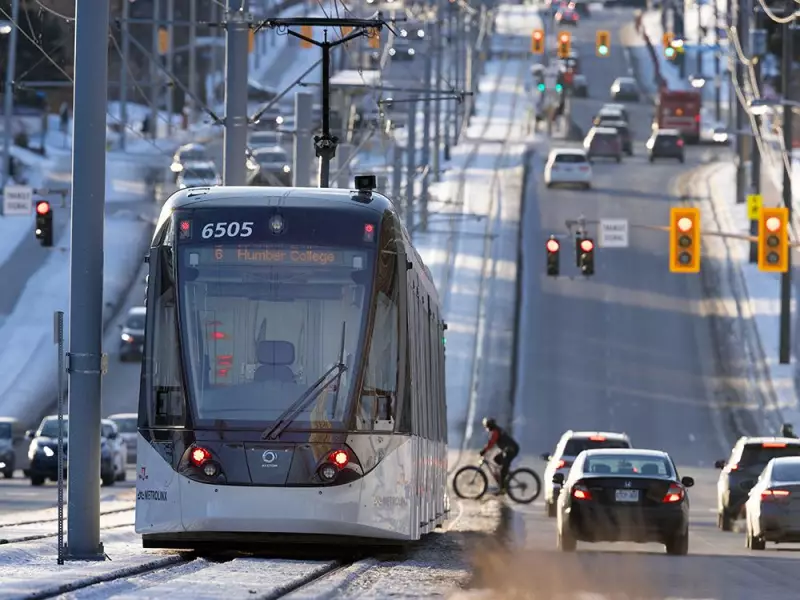
Toronto's latest major public transit investment has become a symbol of frustration rather than progress. The newly opened Finch West Light Rail Transit (LRT) line, a project costing $3.7 billion after years of construction, is proving to be painfully slow, with average speeds that embarrassingly underperform the existing bus service it was designed to replace.
A Dismal Debut: 12 km/h and Falling Behind Buses
The core issue, as experienced firsthand by riders and columnists like the National Post's Chris Selley, is the line's glacial pace. A recent journey covered the 10.3-kilometre route in 50 minutes, resulting in an average speed of just 12 kilometres per hour. The line runs almost entirely at street level, sharing the road with regular traffic.
The irony is stark for passengers: from the window of the new train, they can watch the Number 36 Finch West bus—the very service the LRT is supposed to supersede—overtake them. This visual encapsulates a central critique: for a staggering sum of $3.7 billion, Toronto has acquired a transit line that is currently a downgrade in speed from the existing, far less expensive bus infrastructure.

The High Cost of Slow Transit
The financial dimensions of the project amplify the disappointment. The construction cost translates to approximately $360 million per kilometre. As critics note, this price point in other global jurisdictions could fund fully underground heavy-rail subway lines. The Finch West LRT's challenges are compounded by other Toronto transit woes, such as the slow travel speeds on the extended University Line subway.
A combined trip from Yonge and Bloor to the Finch West LRT's western terminus at Humber College reportedly took one hour and 43 minutes to travel 25 kilometres, a timeframe many commuters would find unfeasible for daily use.
Leadership Response and a Glimmer of Fix
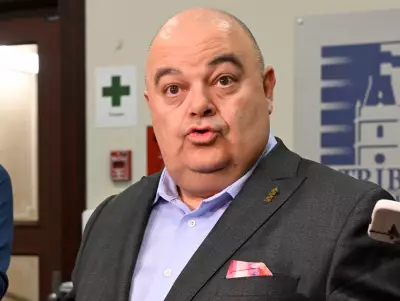
In a rare moment of swift political acknowledgment, Mayor Olivia Chow confirmed she had ridden the LRT and shared the public's concern over its sluggishness. Her directive was simple: "Too slow. Must go faster." It is important to note that while the TTC will operate the line, the province of Ontario was responsible for its construction.
The proposed solution on the table is granting the LRT vehicles "signal priority" at intersections. This traffic engineering measure would allow the trains to bypass or shorten red lights when approaching, reducing time spent waiting for turning vehicles and cross traffic. This is standard practice for surface-level light rail systems worldwide, where the transit vehicle's movement is prioritized over private automobiles to maintain efficient speeds.
A Crisis of Trust in Public Infrastructure
The Finch West LRT debacle touches a nerve beyond mere inconvenience. It feeds into a broader narrative of eroding public trust in government's ability to deliver large-scale infrastructure projects competently, on budget, and with tangible benefits for citizens. The project has been unfavorably compared to the BlackBerry Playbook tablet—memorably described as "unfinished, unusable."
Anxiety is now shifting to the even larger, more troubled, and vastly more expensive Eglinton Crosstown LRT. While much of that line is underground, its at-grade sections face similar potential conflicts with traffic, leading to fears that Toronto may be replicating its mistakes on a grander scale.
The fundamental question raised is one of value and logic: if a multi-billion dollar rail line cannot outperform a flexible bus service that can navigate around obstacles, what is the justification for the immense investment? The answer, for now, lies in the hope that promised fixes like signal priority can salvage the line's utility and restore a measure of faith in Toronto's transit future.