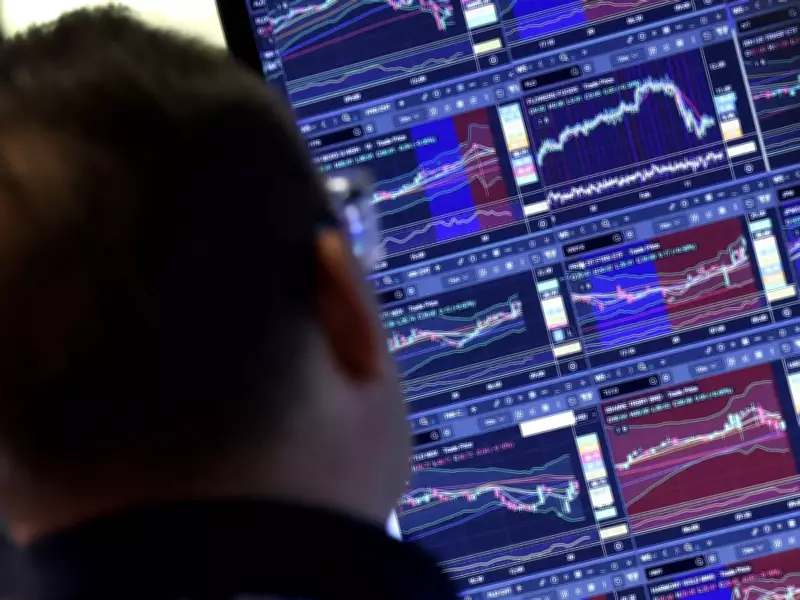
U.S. stock futures experienced a notable decline as mounting uncertainty surrounding American trade policy cast a shadow over market sentiment. The dollar managed to recoup earlier losses, while precious metals like gold saw gains, reflecting a shift in investor focus toward safe-haven assets amidst the turbulent financial landscape.
Market Movements and Key Indicators
S&P 500 futures dropped by 0.2 percent, with investors carefully evaluating the potential consequences of a new 15 percent global tariff. This development follows a Supreme Court decision that struck down former U.S. President Donald Trump's emergency levies, adding another layer of complexity to an already volatile market environment. The greenback recovered most of a 0.3 percent decline, demonstrating resilience in the face of trade-related anxieties. Gold prices climbed, extending a run of three consecutive weekly gains, while Bitcoin briefly slid below the US$65,000 threshold, highlighting the broad-based impact of these economic uncertainties.
Broader Market Context and Catalysts
Tariff concerns are introducing an additional dimension to markets that are already grappling with disruptions from artificial intelligence and escalating tensions in the Middle East. Monday's retreat marks an uneasy start to the trading week, with key events on the horizon likely to serve as major catalysts. Trump's upcoming State of the Union address on Tuesday and Nvidia Corp.'s earnings report the following day are anticipated to significantly influence market direction and investor confidence.

Stephan Kemper, chief investment strategist at BNP Paribas Wealth Management, commented on the situation, stating, "Markets quickly realized that the ruling might not change much in the near term and will rather increase uncertainties. Donald Trump is not known to avoid a fight or give up easily." This sentiment underscores the pervasive anxiety among investors as they navigate the evolving trade policy landscape.
Global Market Reactions and Sector Performance
European stocks exhibited fluctuations, with the Stoxx 600 index paring early losses before slipping again. This movement was partly driven by news that Novo Nordisk A/S's Cagrisema next-generation obesity shot fell short of Eli Lilly & Co.'s rival in a clinical trial. Novo shares slumped as much as 11 percent in Copenhagen, while Eli Lilly rose 3.6 percent in U.S. premarket trading, illustrating the interconnected nature of global markets.
Nasdaq 100 contracts dropped 0.4 percent, though tech stocks led gains in Asian markets. This divergence was fueled by hopes that the tariff ruling might benefit two of the region's largest economies, China and India. Meanwhile, Treasuries traded flat, with the 10-year yield holding steady at 4.08 percent, indicating a cautious approach among bond investors.
Long-Term Implications and Investor Strategies
The latest developments in trade policy could reinforce a pattern observed this year, where U.S. stocks lag behind their global counterparts. Unexpected policy decisions are pushing investors toward alternative assets, as uncertainty over long-term trade policies and their potential impact on corporate earnings at elevated valuations adds further pressure on U.S. equities. Richard Hunter, head of markets at Interactive Investor, noted, "Tariff developments have turned the situation into an unholy mess, prompting far more questions than answers. A weekend of confusion may yet have revived the 'sell America' trade."
Investors are now actively trying to gauge how the 15 percent global tariff will affect countries with existing trade agreements and whether these new levies can withstand legal scrutiny. The European Union has indicated it may freeze the ratification process of its deal with the U.S., seeking additional details from the Trump administration. Senior U.S. officials, including Trade Representative Jamieson Greer, have signaled that the court decision is unlikely to unravel previously negotiated agreements, but the ambiguity persists.

Hunter further elaborated, "Global trade uncertainty is back as an issue for investors and that's bad news for U.S. assets. The dollar's slide has the potential to extend, and the S&P 500's underperformance relative to peers will become more entrenched as investors price in the impact." This analysis highlights the broader implications for U.S. financial markets as they contend with renewed trade jitters and policy unpredictability.