

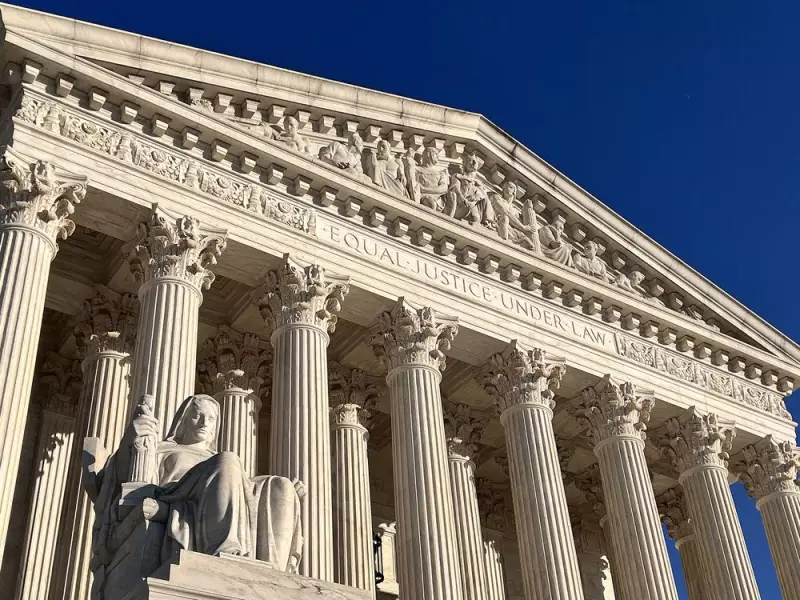
The United States Supreme Court is poised to deliver a pivotal ruling on the legality of sweeping tariffs imposed by former President Donald Trump in April, a decision that represents a significant upcoming test for U.S. equity and bond markets. The court has scheduled Friday, January 8, 2026, as an opinion day, marking the first opportunity for a verdict that could send shockwaves through financial markets.
Market Context and Immediate Implications
Equity markets have carried their momentum into the new year, with the S&P 500 Index hovering near a record high, approximately 40% above its lows from April. This rally has been fueled by the artificial intelligence boom and Trump's earlier decision to dial back some of the most severe tariffs. Concurrently, Treasury yields have retreated from their mid-2025 peaks as traders anticipate continued Federal Reserve rate cuts amid a cooling economy.
Analysts suggest the immediate market reaction to a ruling against the tariffs is somewhat predictable. Such a decision would likely provide a tailwind for stocks by promising to improve corporate profit margins and alleviate a financial burden on consumers. Conversely, Treasuries may face selling pressure as the potential economic stimulus complicates the Federal Reserve's path for interest rate cuts and threatens to exacerbate the government's budget deficit.

Sector Winners and Potential Standouts
A ruling striking down the tariffs could boost the earnings of S&P 500 companies, before interest and taxes, by an estimated 2.4% in 2026 over the previous year's levels, according to Wells Fargo & Co. chief equity strategist Ohsung Kwon. James St. Aubin, chief investment officer at Ocean Park Asset Management, views this as a potential catalyst for a market rally.
Certain sectors and companies stand to benefit disproportionately. Businesses heavily reliant on imported goods, particularly those catering to U.S. consumers, have been most affected. Financial firms and banks could gain from a more confident consumer with greater spending power. Clear winners, as noted by Bloomberg Intelligence, include clothing and toy companies—sectors dependent on imports from China and other Asian nations that faced some of the highest tariffs.
Potential stock standouts to watch include Nike Inc., Mattel Inc., Deckers Outdoor Corp., Under Armour Inc., Crocs Inc., and American Eagle Outfitters Inc. Home furnishing stocks like Wayfair Inc., Williams-Sonoma Inc., and RH have also experienced volatility tied to tariff uncertainty. On the flip side, materials, commodities, and domestic producers that benefited from protectionist measures might underperform, according to Haris Khurshid, chief investment officer at Karobaar Capital.
Longer-Term Uncertainty Remains
Even if the Supreme Court rules that Trump exceeded his authority with the blanket tariffs, significant longer-term uncertainty will persist. The White House could attempt to re-impose similar levies by invoking different legal powers. Therefore, while the court's decision will dictate the immediate market narrative, the overarching theme of trade policy volatility may continue to influence investor sentiment and corporate planning in the months ahead.






