

Markets Plunge as Trump's Iran War Address Fails to Provide Clarity
Global financial markets recoiled sharply on Thursday, with stocks sliding, oil prices surging, and the U.S. dollar firming after President Donald Trump's prime-time address dashed hopes for clarity on when the conflict with Iran might end. In his speech, Trump stated that the United States would hit Iran "extremely hard" within weeks, claiming military goals were nearly achieved and the war was close to concluding. However, investors found little reassurance, leading to a swift sell-off in risk assets.
Investor Disappointment and Market Reaction
Jon Withaar, a senior portfolio manager at Pictet Asset Management in Singapore, highlighted the market's disappointment, noting, "We have no additional certainty or clarity around timeline from this address, and this is what the market was looking for." He added that the prospect of two to three more weeks of military action, with boots on the ground not ruled out and threats to infrastructure reiterated, would push markets back into a defensive stance, especially ahead of the long weekend.
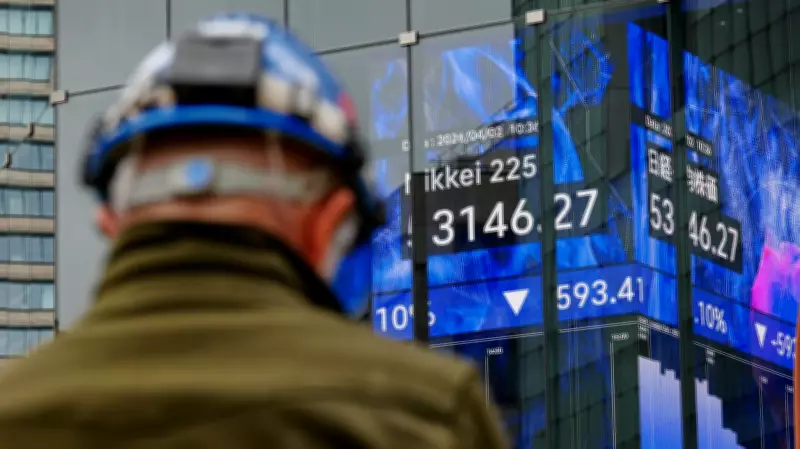
In the immediate aftermath of the speech, investors rushed to sell almost everything except the U.S. dollar, while oil prices climbed higher. U.S. stock futures dropped by 1%, and European futures sank over 1.5%. Asian markets were hit particularly hard, with Japan's Nikkei index falling 1.8% and South Korea's Kospi index sliding 3.6%. MSCI's broadest index of Asia-Pacific shares outside Japan declined over 1.5%, with nearly all bourses in the region trading in negative territory.

Oil Prices and Strait of Hormuz Concerns
The front-month Brent contract for June rose approximately 5% to $106.16 per barrel as investors grew concerned about ongoing supply disruptions. Trump's speech failed to outline when or how the Strait of Hormuz—a critical fuel shipping route—would reopen, exacerbating fears of prolonged oil shortages affecting Asia. Prashan Newnaha, a senior rates strategist at TD Securities, emphasized, "The only thing that really matters is whether the Strait of Hormuz will open soon. Trump's speech doesn't imply this is likely to happen as quickly as the markets were expecting."
Trump commented that the United States does not need the key oil gateway and that it would open naturally once the conflict concludes. However, Iran has repeatedly fired on Gulf countries, some hosting U.S. bases, and is using the strait as leverage in the conflict. Newnaha also noted that Trump's references to the duration of prior wars suggested the Iran conflict might last months, though not as long as previous engagements.
Stagflation Fears and Currency Movements
Trump's remarks rekindled concerns over stagflation, a toxic mix of high inflation and weak growth that previously roiled markets in March. The U.S. dollar has emerged as the preferred haven during this turmoil, strengthening against most currencies following the address. The euro weakened by 0.25% to $1.156, while the dollar index, which measures the U.S. currency against six other units, rose 0.3% to 99.858 after dropping nearly 1% in the prior two days on optimism about a swift end to the war.
This market volatility underscores the heightened uncertainty surrounding geopolitical tensions in the Middle East and their profound impact on global economic stability. As investors await further developments, the focus remains on potential military escalations and their implications for energy supplies and financial markets worldwide.






