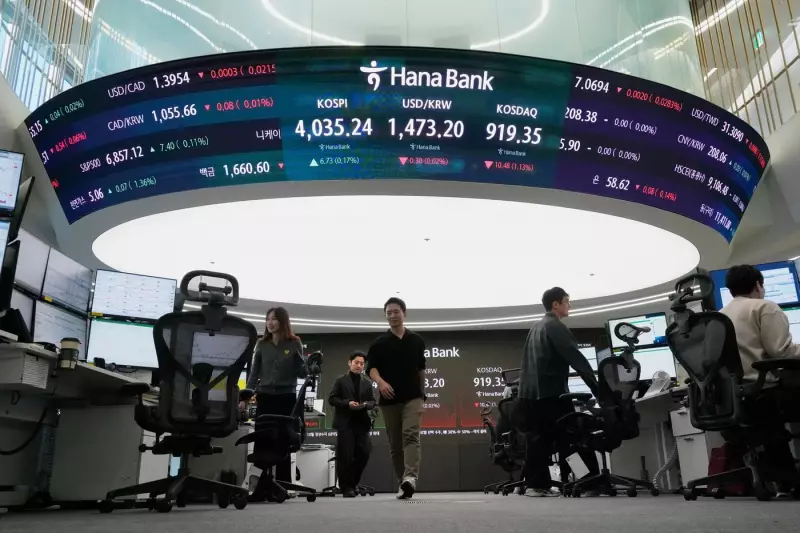
Global financial markets adopted a defensive posture on Monday, with share prices trending lower in Europe and Asia. The cautious sentiment stems from investor anticipation of two critical U.S. economic reports scheduled for release later this week.
Markets in a Holding Pattern
Trading floors from Frankfurt to Hong Kong saw a lack of decisive direction, as participants held back from making significant moves. The prevailing mood is one of watchful waiting, with major indices edging into negative territory. Analysts describe the movement as markets "lacking direction" while they seek clarity on the economic outlook from the world's largest economy.
The focal point for investors globally is the upcoming U.S. data on employment and consumer prices. These reports, covering jobs and inflation for December 2025, are considered powerful indicators that could shape the Federal Reserve's approach to interest rates in the new year.

The Data Driving the Caution
The specific reports causing this market hesitation are the U.S. non-farm payrolls and the Consumer Price Index (CPI). Strong jobs data coupled with persistent inflation could signal that the Fed will maintain a tighter monetary policy for longer, potentially keeping interest rates higher. Conversely, signs of a cooling economy might prompt expectations of earlier rate cuts.
This pre-data anxiety is a common feature in global finance, where capital flows are highly sensitive to U.S. monetary policy. Higher U.S. interest rates often strengthen the U.S. dollar and can draw investment away from other regions, putting pressure on foreign markets and currencies.
Broader Context and Outlook
The market's tentative stance underscores the continued dominance of macroeconomic indicators in driving short-term investment decisions. While corporate earnings and regional developments remain important, the overarching narrative for 2025 continues to hinge on the path of inflation and central bank responses, particularly from the Fed.
Financial experts suggest that the release of this data on December 16, 2025, will likely break the current stalemate, setting a clearer tone for trading as the year draws to a close. Until then, volatility may remain subdued, but the potential for significant movement following the reports is high.