Wall Street Stages Major Rebound as Dow Surpasses 50,000 Milestone
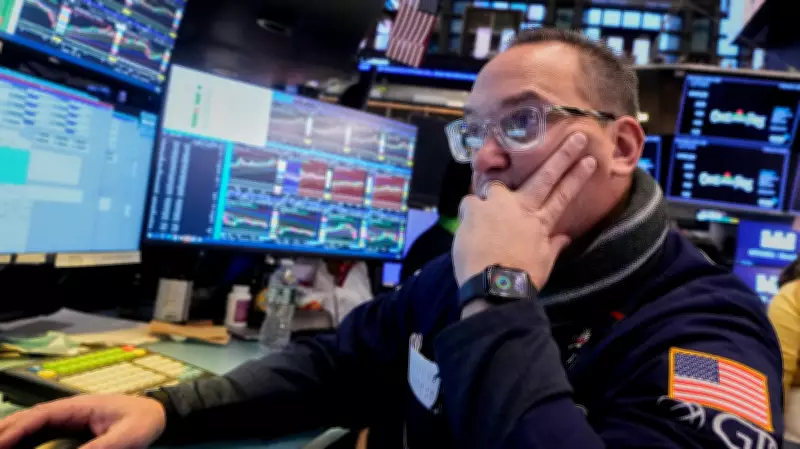
Specialist Anthony Matesic works at his post on the floor of the New York Stock Exchange, Friday, Feb. 6, 2026. via Associated Press
NEW YORK — The U.S. stock market roared back to life on Friday, staging an impressive recovery that saw major indices post their best gains in months. Technology stocks, which had suffered significant declines earlier in the week, recovered much of their losses, while bitcoin halted its recent plunge, at least temporarily.
Major Indices Post Strong Gains
The S&P 500 jumped 1.7% on Friday, heading toward its best single-day performance since May. The Dow Jones Industrial Average soared an impressive 1,102 points, representing a 2.2% gain, and topped the 50,000 level for the first time in its history. Meanwhile, the Nasdaq composite rose 1.9% as of 2:30 p.m. Eastern time.

Chip Companies Lead Technology Rally
Chip manufacturers played a crucial role in driving the widespread market rally. Nvidia jumped 7.3%, trimming its loss for the week, which had stood at just over 10% entering the day. Broadcom climbed 7.2%, completely erasing its weekly decline.
These two semiconductor giants were the strongest forces lifting the S&P 500, benefiting from renewed optimism about continued spending by customers diving into artificial-intelligence technology. Amazon, for example, announced late Thursday that it expects to invest approximately $200 billion this year to capitalize on what it called "seminal opportunities like AI, chips, robotics, and low earth orbit satellites."
Concerns About Big Tech Spending
Despite the positive momentum, concerns persist about massive AI-related expenditures by Big Tech companies. Amazon's stock actually dropped 7% on Friday, reflecting investor uncertainty about whether these substantial investments will generate sufficient future profits.
Similar concerns emerged after Alphabet announced comparable spending plans a day earlier. The fundamental question remains whether these enormous dollar amounts will prove worthwhile and create significantly larger profits down the line.
Market Context and Weekly Performance
Even with Friday's strong rebound, the S&P 500 remains potentially headed toward its third losing week in the last four. Beyond worries about AI spending by influential Big Tech companies, concerns about AI potentially stealing customers from software companies also weighed on the market throughout the week.
Software stocks faced particular pressure after AI firm Anthropic released free tools designed to automate services like legal work, accelerating concerns about industry disruption.
Cryptocurrency and Metals Market Developments
Bitcoin steadied following a weekslong plunge that had sent it more than halfway below its record price set in October. The cryptocurrency climbed back above $70,000 after briefly dropping close to $60,000 late Thursday.
In the metals market, prices calmed somewhat following their own wild swings. Gold rose 1.8% to settle at $4,979.80 per ounce, while silver added 0.2%. These precious metals had experienced jaw-dropping rallies driven by investors seeking safe havens amid concerns about political turmoil, an expensive U.S. stock market, and massive government debt loads worldwide.
Crypto-Related Stocks Surge
The recovery in bitcoin helped boost stocks of companies deeply involved in the cryptocurrency economy. Robinhood Markets jumped 13.6% for the biggest gain in the S&P 500. Crypto trading platform Coinbase Global rose 11.4%, while Strategy, a company that has built a business around buying and holding bitcoin, soared an impressive 24.5%.
Smaller Companies and Consumer Sentiment
Stocks of smaller U.S. companies also helped lead the market higher, along with companies whose profits depend on American households spending more money. These sectors benefited from potentially encouraging data about U.S. consumer sentiment.
A preliminary report from the University of Michigan suggested that sentiment among U.S. consumers is improving slightly, contrary to economists' expectations of a drop. The improvement was strongest among households who own stocks, which have benefited from the S&P 500 setting a record late last month.

However, Surveys of Consumers Director Joanne Hsu noted that sentiment "remained at dismal levels for consumers without stock holdings," highlighting a significant divide in economic confidence.
Sector-Specific Performance
Airline stocks performed strongly on hopes that increased consumer confidence will translate into more spending on travel. United Airlines gained 9.2%, Delta Air Lines rose 7.6%, and American Airlines increased 7.5%.
The smaller stocks in the Russell 2000 index jumped 3.4%, roughly double the gain of the S&P 500. Smaller companies' profits tend to be more dependent on the strength of the U.S. economy than those of large, multinational corporations.
International Market Movements
In stock markets abroad, indexes rose across much of Europe despite significant news from the automotive sector. Stellantis, the auto giant whose stock trades in Italy, lost 25.2% after announcing it would take a charge of 22 billion euros (approximately $26 billion) as it dials back its electric vehicle production.
The automaker acknowledged "over-estimating the pace of the energy transition" and said it was resetting its business "to align the company with the real-world preferences of its customers."
Stocks fell across much of Asia, but Japan's Nikkei 225 rose 0.8%. It benefited from a 2% climb for Toyota Motor, which announced that CEO Koji Sato will step down in April and will be replaced by the company's chief financial officer, Kenta Kon.
Bond Market Stability
In the bond market, Treasury yields held relatively steady. The yield on the 10-year Treasury erased an earlier modest loss and held at 4.21%, where it was late Thursday, indicating stability in fixed-income markets amid the equity rally.