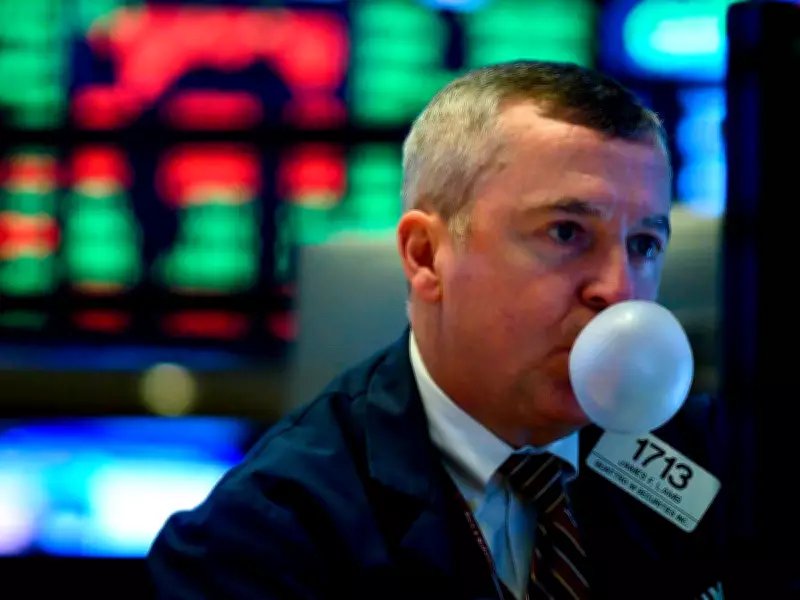
A top strategist at Bank of America has issued a stark warning about the current market bubble, claiming it rivals the excesses of the Roaring '20s and other historic bubbles. Michael Hartnett, investment strategist at BofA Securities, noted that the anticipated mega-IPOs of SpaceX, OpenAI, and potentially Anthropic could push the concentration of technology stocks in the S&P 500 to 48 percent.
Market Concentration at Record Levels
Hartnett described the current market conditions as "bubbly," citing strong price action, retail investor mania, and slumping volatility. He warned that adding these mega-IPOs to the existing tech giants would push market concentration to levels not seen since the Roaring '20s, the Nifty 50 era of the 1970s, Japan's bubble in the 1980s, and the TMT bubble of the 1990s. The only historical peak it would not exceed is the railroad bubble of the 1880s, which reached 63 percent.
The Magnificent Seven and Beyond
For years, analysts have worried about the dominance of the "Magnificent Seven" tech stocks: NVIDIA Corp., Microsoft Corp., Apple Inc., Alphabet Inc., Amazon.com Inc., Meta Platforms Inc., and Tesla Inc. These giants have already pushed technology's weighting on the S&P 500 to over 44 percent, according to Bloomberg. The addition of "the Big Three" would push it well into bubble territory.

SpaceX has already filed for its initial public offering, potentially the largest stock market debut in history, with a valuation of US$1 trillion. It could come as early as next month. OpenAI and Anthropic have yet to file but are reportedly racing to launch their listings by the end of this year.
IPO Wave Signals Exuberance
Owen A. Lamont, senior vice president of Acadian Asset Management, calls high net equity issuance the "Third Horseman of the Bubble Apocalypse." He argued in March that it had yet to appear. However, if SpaceX, OpenAI, and Anthropic all go public this year, they could potentially add US$3 trillion in market cap to the public market, amounting to a 1999-sized IPO wave. "In reality, if the Big Three go public, we'd also probably see hundreds of small fry joining in," Lamont said.
Signs of this exuberance were already evident after the market debut of semiconductor group Cerebras Systems Inc. earlier this month. The AI chip designer raised US$6.4 billion in the largest semiconductor IPO in history and ended its first day of trading up 68 percent, valuing the start-up at about US$70 billion. Bankers told the Financial Times that fundraisings could hit record highs this year.
Bubbles Can Last for Years
Even if an IPO wave signals a bubble, it is not necessarily a sign of a market top, as bubbles can last for years. Lamont pointed to the Netscape IPO of August 1995 as a "watershed event" in the late 1990s tech bubble, but the markets did not peak until more than four years later.