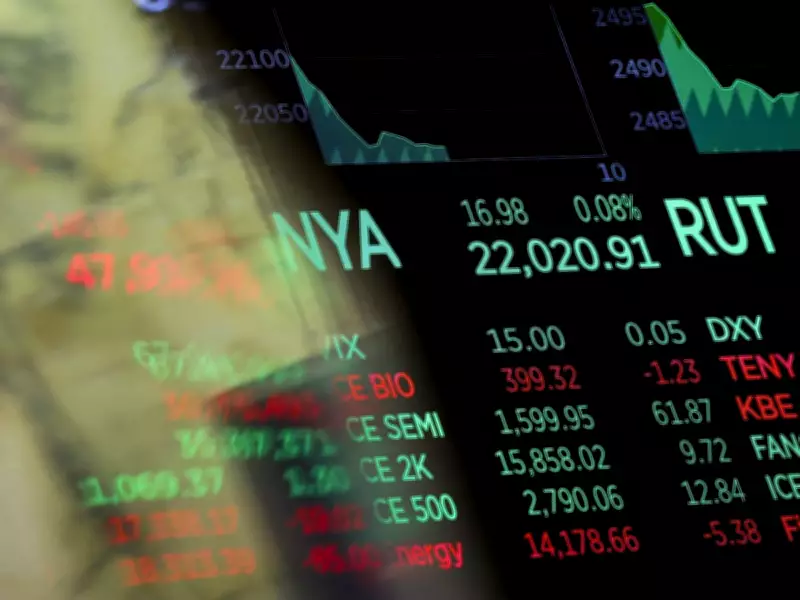
Trillion-Dollar Tech Wipeout Spreads Across AI Sector as Stocks Plummet
In a dramatic market reversal, companies once celebrated as prime beneficiaries of the artificial intelligence boom are now showing unmistakable signs of investor fatigue. The selloff, which has rapidly expanded across global markets, represents one of the most significant corrections since ChatGPT entered mainstream consciousness three years ago.
Unprecedented Speed and Scale of Market Decline
The sheer velocity and breadth of this market movement distinguishes it from previous AI-driven corrections. Within just two days, hundreds of billions of dollars evaporated from the valuations of stocks, bonds, and loans across Silicon Valley and beyond. Software stocks have borne the brunt of this decline, with an iShares ETF tracking these companies losing nearly US$1 trillion in value over the past seven trading sessions alone.
Unlike previous market downturns triggered by bubble fears, this correction stems from growing concerns that artificial intelligence technology may be on the verge of fundamentally disrupting the business models of numerous companies. Market analysts note that doomsayers have long predicted this vulnerability for certain sectors, but the current selloff suggests investors are taking these warnings more seriously than ever before.

Catalyst and Market Reaction
The initial spark came from an apparently innocuous development: AI startup Anthropic PBC released a new tool designed for legal work, including contract review. While the product itself isn't considered revolutionary, its arrival following a year of transformative AI coding tools has sent shockwaves through investment circles.
"I don't think it is an overreaction," stated Michael O'Rourke, chief market strategist at Jonestrading. "For two years, we have been talking about how AI is going to change the world and that it is a multi-generational technology. In the past few weeks, we have seen signs of it in practice."
Analysts have expressed particular concern about the potential for AI disruption to spread beyond legal technology. "While today it's legal tech, tomorrow it might be sales or marketing or finance," wrote Jackson Ader, an analyst at KeyBanc, highlighting the pervasive nature of investor anxiety.
Even AI Beneficiaries Show Weakness
Adding to market unease, companies traditionally viewed as AI winners are displaying unexpected vulnerability. Recent earnings reports revealed troubling developments:
- Alphabet Inc. announced higher-than-anticipated capital spending on artificial intelligence initiatives
- Arm Holdings Plc issued a revenue forecast that fell short of market expectations
- Both companies experienced significant declines in after-hours trading following these announcements
"We start with just selling off software, now we're selling everything," observed Gil Luria, a managing director at D.A. Davidson. "It self-perpetuates, stocks go down enough then that creates negative momentum, and then other people sell."
Global Market Impact
The market correction extends far beyond U.S.-listed companies, creating a truly international phenomenon:
- London Stock Exchange Group Plc has experienced significant declines
- Major Indian technology firms Tata Consultancy Services Ltd. and Infosys Ltd. have tumbled this week
- Asian markets followed the downward trend, with Samsung Electronics Co. dragging down South Korea's equity benchmark
- Taiwan's technology-dominated market slid substantially
- SoftBank Group Corp. shares in Tokyo declined following Arm's sales warning
The financial infrastructure supporting the technology industry has also felt the impact. More than US$17.7 billion of U.S. tech company loans in a Bloomberg index have dropped to distressed trading levels during the past four weeks, affecting lenders and private equity owners who have heavily invested in software firms.

Market Psychology and Future Implications
Paradoxically, much of the current market anxiety remains hypothetical. Leading software providers including ServiceNow Inc. and Salesforce Inc. haven't missed earnings targets or indicated that artificial intelligence is causing customer attrition. This suggests that psychological factors and forward-looking concerns may be driving the selloff as much as concrete financial results.
The current market correction represents a significant recalibration of investor expectations regarding artificial intelligence's impact on business models. As the technology continues to evolve and demonstrate practical applications across multiple industries, market participants appear to be reassessing their positions with greater caution than during the initial AI investment frenzy.