

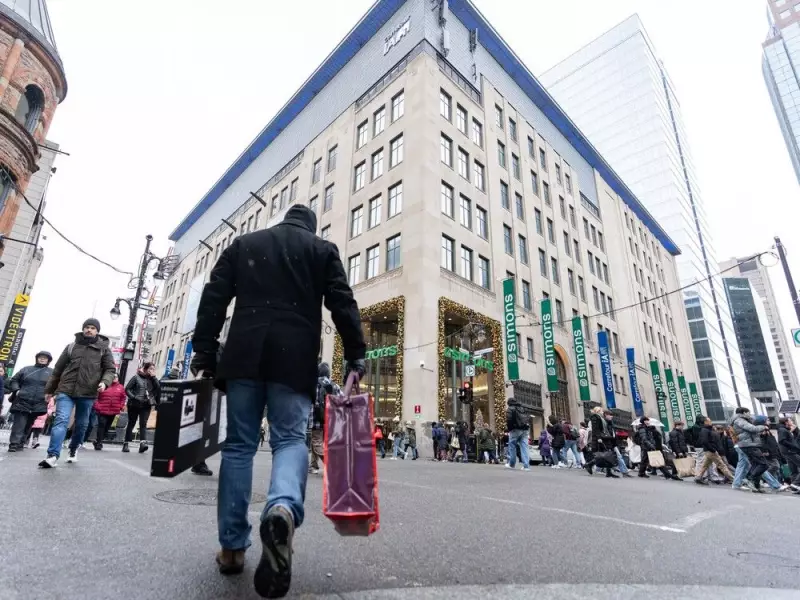
Canadian retailers faced a sluggish start to the crucial holiday shopping season, as sales unexpectedly declined in October according to new data from Statistics Canada.
Key Sectors See Declines
The agency reported that total retail sales fell 0.2 per cent in October to $69.4 billion. The drop was led by a notable decrease in sales at food and beverage retailers. A significant factor was a staggering 10.6 per cent plunge in beer, wine, and liquor sales, which StatCan noted coincided with labour disruptions involving public-sector workers in British Columbia, including employees at provincial liquor stores.
Grocery stores and supermarkets across the nation also reported lower receipts, with sales down 0.7 per cent. The weakness extended beyond consumables. Core retail sales, which exclude typically volatile sectors like gasoline stations and motor vehicle dealers, dropped 0.5 per cent, marking a second consecutive monthly decline.

Mixed Performance Across Retail Categories
The softness was broad-based. Sales at retailers specializing in clothing, accessories, footwear, jewelry, luggage, and leather goods decreased by 0.7 per cent. Health and personal care retailers also saw a dip of 0.3 per cent.
Not all news was negative. One bright spot came from retailers of furniture, home furnishings, electronics, and appliances, which posted a 1.1 per cent increase in sales—the largest gain within the core retail segment for the month. When adjusted for volume, the picture was even softer, with retail sales decreasing 0.6 per cent in October.
Economists See a Cautious Consumer and Flat Trend
Looking ahead, StatCan's advance estimate points to a potential rebound, suggesting sales increased by 1.2 per cent in November. However, economists caution against over-optimism.
In a note, CIBC economist Andrew Grantham suggested that even with a November bounce, retail sales volumes likely remained below their summer average. "Through the ups and downs of the monthly volatility, Canadian retail sales appear to be going nowhere so far during the second half of the year," Grantham wrote. He pointed to weakening population growth and apparent consumer caution as factors behind the softer underlying trend.
This consumer restraint, Grantham argued, could help ease underlying inflation pressures, potentially allowing the Bank of Canada to maintain its current lower interest rate level through 2026.
Other analysts expressed deeper concern. David Rosenberg, founder of Rosenberg Research & Associates Inc., highlighted that the year-over-year trend is downward, with retail activity now lower than at the end of 2024. "This does not bode well for Q4 GDP," he stated. Rosenberg also pushed back on market speculation about imminent rate hikes from the central bank, given the soft demand environment, bluntly adding, "Not likely."
The October data paints a picture of a hesitant Canadian consumer heading into the vital holiday period, setting the stage for a closely watched retail performance in November and December.






