

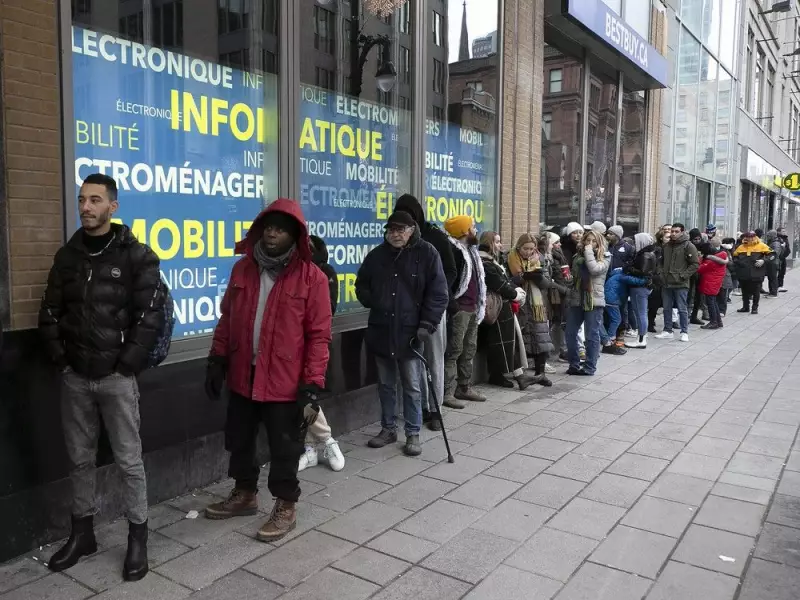
The iconic image of determined shoppers queuing in the cold before dawn on December 26th, waiting for Boxing Day doors to swing open, is fading into retail history. According to industry experts, profound shifts in how Canadians shop have fundamentally reshaped the discount calendar, transforming single-day events into a sprawling "season" of sales that now runs from late October through the first week of January.
The End of the One-Day Spectacle
"Many years ago, it was only for one day, same for Black Friday," said Francis Mailly, Vice-President of Public Affairs for Quebec at the Retail Council of Canada. "It's true that the symbolism of the day is not as strong as it used to be." This elongation of deal periods means the perceived value of discounts on specific days like Boxing Day may feel diminished to consumers, even if the actual savings are still present.
Vivek Astvansh, an Associate Professor of Quantitative Marketing and Analytics at McGill University, recalls the communal ritual from two decades ago. "I'm talking about, like, 20 years ago when I first moved to North America," Astvansh said. "It used to be a ritual. It was cold, but it was a ritual, and I would have many friends. We would have popcorn with us, coffee. It was beautiful. However, the world was very different back then. There were no online sales … and the retailers also sort of celebrated that one day with us."

The Digital Shift and Changing Consumer Psychology
The rise of e-commerce is the primary engine behind this change. While online shopping existed before, the COVID-19 pandemic accelerated its adoption permanently, similar to how platforms like Zoom remained essential post-lockdown. "It exists, it's there, it's accessible," Mailly noted. This convenience has turned shopping from an event into a routine. "When people are bored, they will pull out their phone, look at Amazon, swipe left, swipe right, buy a few things," Astvansh observed. "It's so convenient. But then it also takes away the charm and the effort of purchasers."
The sentiment around major purchases has also evolved. "There is greater affordability," Astvansh explained. "Society has changed. About 10 years ago, shopping for big items used to be an event in the family or in a person's life. Now, it is just, 'OK, I bought a phone,' that's it." Furthermore, the constant presence of promotions has altered consumer expectations. "Now, you go to a store and … if you don't see a percentage discount, you are surprised," he said, highlighting how retailers often manipulate prices to create a perpetual sense of a deal.
The New Reality and Shopping Smart
Despite the drawn-out season, interest in Boxing Day persists. A recent Retail Council of Quebec survey found 61 per cent of respondents still plan to take advantage of Boxing Day sales. Interestingly, intent to shop in-store rose to 42 per cent this year from 29 per cent last year, while online shopping intent dropped to 32 per cent from 42 per cent in 2024.
For consumers seeking the best value in this extended landscape, Professor Astvansh offers several tips:
- Consider waiting until after New Year's for the deepest clearances.
- Ensure purchases are refundable in case the item is discounted further.
- When shopping on platforms like Amazon, check the price history of the item.
For those planning the traditional in-person Boxing Day experience, stores typically open around 1 p.m. on December 26th. Experts predict the current model—a season of sales beginning in October and tapering off in early January—will remain the new normal, permanently diluting the frenzy around any single discount day while offering more flexible, if less dramatic, opportunities to save.






