Vancouver's Most Complex Development Site Sparks Debate Over New Tower Proposal
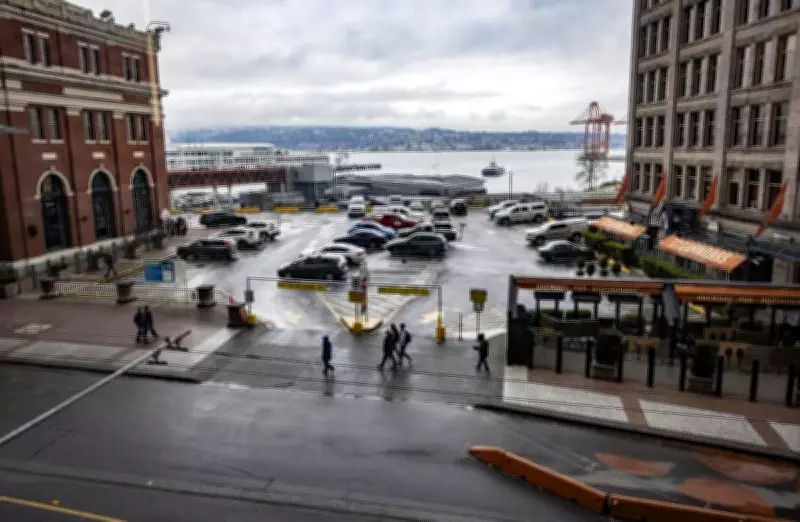
The question of how complicated it could be to construct an office tower on a downtown Vancouver parking lot that has remained undeveloped for decades has a straightforward answer: extremely complicated. This is particularly true for the property located at 601 West Cordova Street, which has long been regarded as one of the city's most challenging development sites.
A Site of Unparalleled Complexity
Renowned architect James Cheng, whose firm has shaped Vancouver's skyline with iconic structures like the Shangri-La and Fairmont Pacific Rim, describes the 601 West Cordova property as "the most complicated site I've ever worked on, with so many affected parties." Cheng's architectural practice has now designed a 22-storey, tree-inspired office tower for this location, which is owned by real estate giant Cadillac Fairview.
The parking lot occupies a uniquely problematic position between two of Vancouver's most significant heritage buildings and adjacent to British Columbia's busiest transit hub. The site is further complicated by a tangled web of real estate ownership at multiple levels:

- Street-level property rights
- Underground ownership considerations
- Airspace rights and restrictions
Historical Context and Previous Attempts
This is not the first attempt to develop this challenging property. Approximately a decade ago, Cadillac Fairview proposed a controversial tower design that critics nicknamed "the ice pick." That proposal faced rejection from Vancouver's urban design panel and ultimately failed to advance. It's important to note that Cheng and his firm were not involved in that earlier design effort.
The site's northern boundary touches what many consider Vancouver's largest unrealized city-making opportunity: the central downtown waterfront stretching between CRAB Park and Canada Place. This waterfront corridor has been the subject of planning debates, proposals, and discussions for decades, yet remains largely undeveloped with gravel lots, railway lines, and an inaccessible foreshore.
The Waterfront Vision and Current Challenges
Standing in his firm's conference room, Cheng recently gestured toward a large presentation screen displaying Vancouver's skyline as viewed from Burrard Inlet. He pointed out the beautiful development extending from Stanley Park through Coal Harbour to the Convention Centre and Canada Place, noting that "We have a beautiful city up until there," indicating the area around the SeaBus terminal, "and then it stops."
Developing this specific stretch of waterfront has proven exceptionally difficult over the years due to competing interests among the diverse stakeholders with claims to the area. These stakeholders include:
- The City of Vancouver
- The British Columbia provincial government
- Transport Canada
- The Vancouver Fraser Port Authority
- Canadian Pacific Kansas City railway
- Major private landowners including Greg Kerfoot's holding company
- Cadillac Fairview, which owns both the heritage Waterfront Station building and the adjacent parking lot at 601 West Cordova
Recent Developments and Collaborative Efforts
In 2024, there emerged renewed optimism that the long-standing development stalemate might finally be broken. Key stakeholders signed a memorandum of understanding, forming what they called the Central Waterfront Planning Alliance. This collaborative group brings together representatives from all major parties with interests in the area, marking a significant step toward coordinated planning.
The new tower proposal raises fundamental questions about development sequencing and strategy. Some observers wonder whether proposing a tower for this complex site represents putting the cart before the horse, while others see it as a potential catalyst that could finally kick-start development of Vancouver's biggest unrealized urban opportunity. The debate continues as Vancouver grapples with how to transform one of its most complicated properties into a valuable addition to the city's urban fabric.