Vancouver Developers and Investors Collaborate on Healthcare Worker Housing Projects
Developers and institutional investors are joining forces to construct mixed-use residential projects near major hospitals in Vancouver, specifically designed to accommodate healthcare workers who require convenient living arrangements close to their workplaces. This initiative aims to alleviate the burden of lengthy commutes for medical staff while simultaneously enhancing community infrastructure for all residents.
Two Pioneering Projects Underway in Vancouver
Two distinct developments are currently progressing in Vancouver, marking the city's first dedicated efforts to address housing needs for healthcare employees. Construction has commenced on one project, while another is scheduled to begin in the fall of 2026. Both developments are strategically positioned near hospital facilities to maximize accessibility for medical professionals working irregular shifts.
"One of the most significant challenges we face in Vancouver involves securing appropriate housing for the essential workers who care for us during times of illness," stated Brent Sawchyn, CEO of PC Urban Properties Corp. His company has partnered with Chicago-based Harrison Street Asset Management on a major rental development located at West 13th Avenue and Willow Street, directly across from Vancouver General Hospital.

Comprehensive Development Features and Modifications
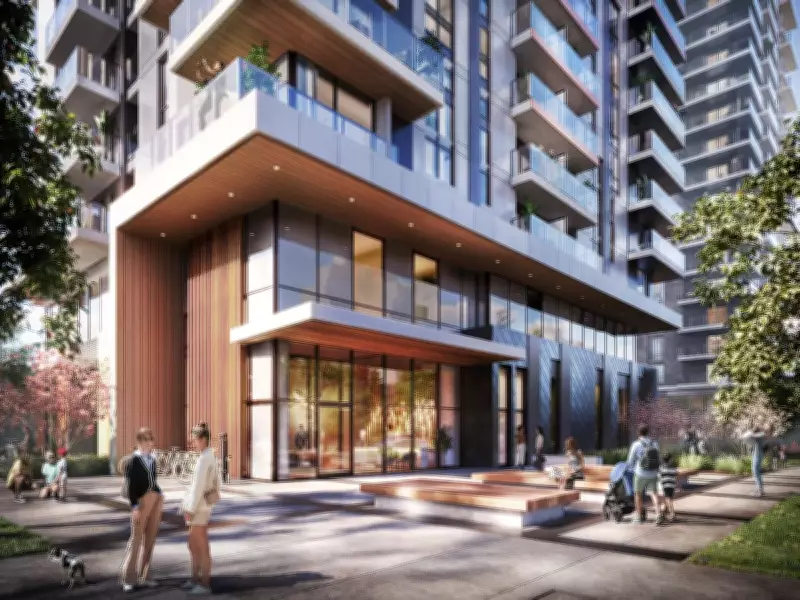
The West 13th Avenue project will feature two impressive 22-storey towers alongside an expansive 11,000-square-foot childcare facility. This childcare center is specifically designed to offer extended operating hours to accommodate healthcare workers employed on evening and overnight shifts, addressing a critical need for round-the-clock support services.
Originally approved for rezoning in April 2025 to accommodate 354 market-rental units, the project underwent significant modifications during the final approval stages in fall 2025. Developers reconceptualized the plan to better serve hospital employees' specific requirements, ultimately receiving formal approval in February 2026 with increased unit capacity.
Vancouver City Council authorized an expansion from the initial 354 units to 507 residential spaces. This increase was achieved by relaxing previous requirements for two- and three-bedroom units, allowing for more studio and one-bedroom configurations. Additionally, the development will include fully furnished turnkey units where rental rates encompass utilities and WiFi services.
Affordable Housing Framework and Rental Structure
The city implemented innovative policy adjustments to facilitate these healthcare-focused developments. Municipal authorities eliminated the previous requirement that mandated 20 percent of residential floor space be offered at 20 percent below citywide average market rents.
"The 20 percent deeply discounted affordable rates created substantial financial burdens for the remaining 80 percent of the project," explained Sawchyn regarding the previous policy framework.
Under the new structure, all units will adhere to city-established maximum rent guidelines that fall below averages set by the Canada Mortgage and Housing Corporation (CMHC) for the area. In 2026, these CMHC benchmarks were $2,284 for studios, $2,668 for one-bedroom units, and $3,620 for two-bedroom configurations. This approach results in rental rates approximately 15 to 20 percent lower than comparable new rental properties throughout Vancouver.
Policy Innovation and Industry Implications
Sawchyn emphasized that no existing policy framework previously addressed this specific type of housing development, crediting city staff and council members for bringing the innovative concept to fruition. "This achievement validates Vancouver's real estate industry, where numerous projects receive approval but few actually progress to construction," he noted. "These developments demonstrate genuine enthusiasm for investing in alternative real estate strategies within our urban landscape."
The healthcare worker housing initiative represents a collaborative model between private developers, institutional investors, and municipal government that could establish a precedent for future urban development projects targeting essential service workers across various sectors.