Vancouver Council Rejects Controversial Strathcona Tower Proposal
A highly contentious proposal for three major towers in Vancouver's historic Strathcona neighborhood has been officially sent back to the drawing board by city council. The decision represents a significant setback for one of the city's largest development partnerships and highlights growing concerns about appropriate building scale in established residential areas.
Cross-Party Collaboration Leads to Rejection
In a notable display of political unity, council members from different parties joined forces to refer the application back to city staff for comprehensive reevaluation. ABC Councillor Mike Klassen initiated the motion, which was promptly seconded by Green Party Councillor Pete Fry. The council ultimately voted to return the proposal for further study of alternative options and considerations.
Only OneCity Councillor Lucy Maloney abstained from the vote, while all other participating council members supported the referral motion. This rare cross-party consensus underscores the proposal's controversial nature and the widespread concerns about its potential impact on the neighborhood.

Massive Tower Proposal Details
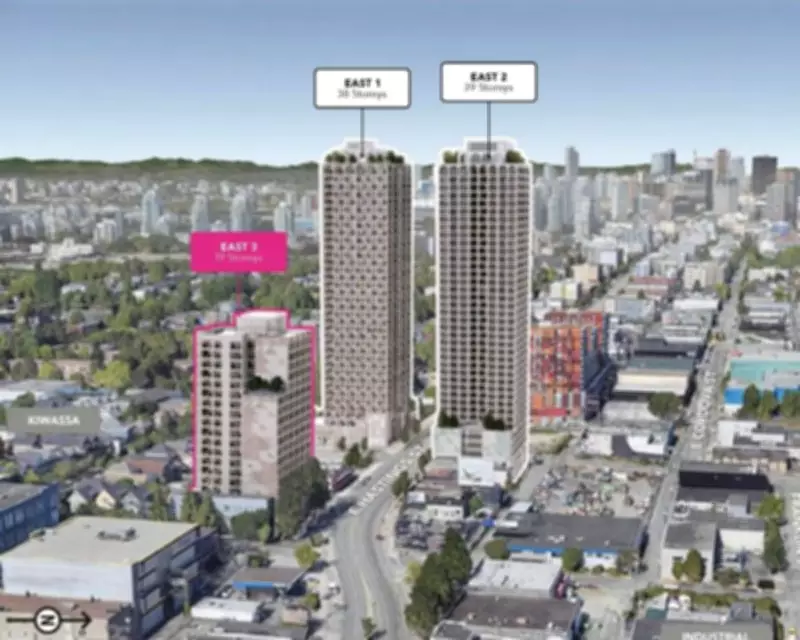
The rejected development plan, a collaboration between prominent developer Westbank and the Promerita Group, would have transformed the 1000 and 1100 blocks of East Hastings Street with three substantial towers:
- A 38-storey rental building at Glen Drive and Hastings Street
- A 39-storey rental building at the same intersection
- A 19-storey social housing building at Vernon Drive and Hastings Street
The proposal represented one of the most ambitious development plans for the Strathcona area in recent years, potentially adding hundreds of new residential units to the neighborhood.
Community Opposition and Scale Concerns
Local residents and council members voiced strong objections to the project's scale, arguing that the proposed towers would be dramatically out of character with Strathcona's existing built environment. The neighborhood currently features a diverse mix of low-rise apartment buildings, single-family homes, and modest commercial structures that create what residents describe as a vibrant, human-scale community.
"You cannot simply force-feed three massive towers into a neighborhood without providing offsetting public amenities or necessary infrastructure upgrades and expect the community to function properly," explained Strathcona resident Jamie Maclaren, echoing widespread community sentiment.
Council Members Voice Substantial Concerns
Green Party Councillor Pete Fry, who represents the Strathcona area and lives in the neighborhood, spoke passionately against the proposal during council deliberations. Fry emphasized that the 40-storey towers would rival the height of developments at major transit hubs like Broadway and Granville stations, despite Strathcona lacking comparable rapid transit infrastructure.
"The sheer scale of this project appears completely out of context with any reasonable planning considerations, even when accounting for discretionary up-building that had been contemplated during the previous council term," Fry stated during the meeting.
ABC Councillor Peter Meizner concurred with these assessments, noting that "the extraordinary heights combined with insufficient public benefits exceed what should reasonably be permitted in this location." Meizner further suggested that such a proposal would likely not be entertained in other city areas without rapid transit access.
Specific Areas for Reevaluation
The council's referral motion specifically directs city staff to conduct detailed studies on multiple critical aspects of the proposal:
- Parking availability and transportation impacts
- Child care provision and family-oriented amenities
- Deeper affordability measures for housing units
- Appropriate building heights, densities, and architectural forms
- Other matters related to local amenities and community benefits
This comprehensive review will essentially require the development team to reconsider fundamental aspects of their proposal before returning to council with a revised plan.

Developer Disappointment and Future Prospects
Ernest Lang of the Promerita Group expressed clear disappointment following the council's decision, having invested significant resources in developing the ambitious proposal. The partnership between Westbank and Promerita Group represents two major players in Vancouver's development landscape, making the council's rejection particularly noteworthy.
The decision sends a strong message about Vancouver's evolving approach to neighborhood development, particularly in established communities like Strathcona that value their existing character and scale. As the proposal returns for further study, all parties will need to balance development objectives with community preservation concerns in what promises to be an ongoing dialogue about Vancouver's urban future.