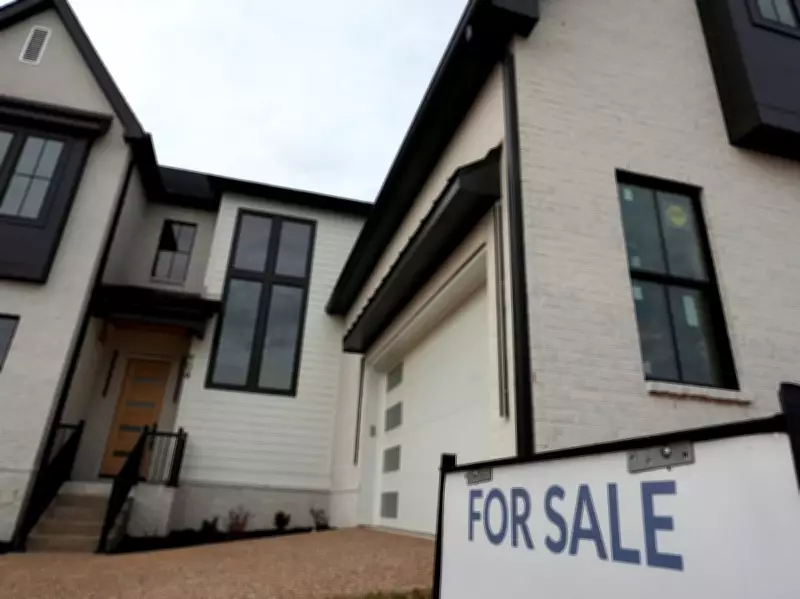
White House Economists Report Severe U.S. Housing Shortage
The United States is grappling with a critical shortage of at least 10 million single-family homes, according to a new report from White House economists. This figure represents a substantial increase compared to previous estimates from both government and private sector sources, highlighting the escalating housing crisis affecting the nation.
Historical Context and Previous Estimates
The Council of Economic Advisers' latest annual Economic Report of the President states that if homebuilding and the growth of the single-family housing stock had maintained their historical pace instead of declining sharply after 2008, there would be 10 million or more additional single-family homes available today. This assessment contrasts with earlier projections.
In November 2024, government-controlled Freddie Mac estimated the U.S. was short 3.7 million housing units based on demand from a growing population. Meanwhile, the National Association of Realtors in June 2021 calculated the shortage at 5.5 million units, using data tracking trends over the previous two decades compared with construction rates from 1968 to 2000.

Political Response and Legislative Actions
The report emerges as policymakers across Washington seek to demonstrate to voters that they are addressing the high cost of housing, a pivotal issue in upcoming midterm elections expected to focus on affordability concerns. Last month, the Senate passed a comprehensive bill aimed at reducing housing costs with an 89-10 vote. However, its future remains uncertain in the House, where lawmakers propose amendments including a controversial measure requiring investors to sell build-to-rent housing within seven years.
In March, U.S. President Donald Trump signed two executive orders to show action on housing affordability. One order aims to ease access to mortgage credit by directing the Consumer Financial Protection Bureau to tailor mortgage rules, making it easier for smaller banks to facilitate more affordable lending. The second order is designed to relax environmental regulations to accelerate development and infrastructure projects.
Previous Proposals and Market Impact
The Trump administration had previously floated several proposals to cut housing costs, such as establishing a 50-year mortgage and allowing borrowers to access their 401(k) pension funds for down payments without penalty. Some of these ideas were rejected by Congress, the financial industry, and even Trump himself.
Additionally, the White House directed Freddie Mac and its sister company Fannie Mae to purchase $200 billion in mortgage bonds in an effort to lower mortgage rates. While this announcement initially led to a modest decrease in rates, the conflict with Iran caused them to rebound. Currently, the interest rate on a 30-year fixed mortgage stands at 6.37%, according to Freddie Mac, more than double the rates seen just five years ago.
This comprehensive analysis underscores the deepening housing shortage and the complex political and economic challenges involved in addressing it, with significant implications for affordability and market stability across the United States.