Innovative Building System Transforms Custom Home Construction
A groundbreaking approach to customized residential construction is demonstrating significant potential to reduce both costs and construction timelines. Smallworks, a custom homebuilding company based in Vancouver, has developed the Trifecta system—a unique building methodology that enables homes to be constructed more rapidly and economically than traditional building methods.
The Trifecta Prototype: A Vancouver Case Study
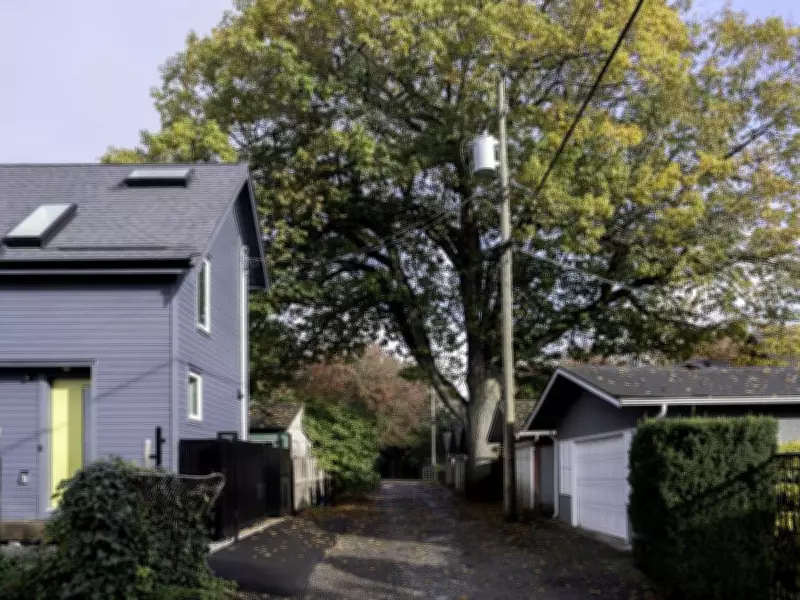
The system's effectiveness is exemplified by a 911-square-foot laneway house in east Vancouver, serving as the prototype for this innovative construction approach. This two-bedroom, two-bathroom residence was built for homeowners Maggie Chao and William Bowden, who sought an affordable permanent housing solution after returning from living abroad.
"Staying in Vancouver was a big priority for us," Chao explained. "We both grew up in East Van. Having the opportunity to be able to stay in the neighbourhood is very different and we feel very fortunate to be able to do that. A laneway house was the only way we would have been able to make that work."

Three-Part Building System
The Trifecta system, partially inspired by the CMHC Innovation program, employs what Smallworks describes as a "Lego block approach" to housing construction. According to Akua Schatz, partner and head of operations for Smallworks, the system comprises three distinct components:
- Panels: Pre-fabricated closed-wall panels containing insulation and weatherproofing for floors, walls, and roofs
- Pods: Bathroom units that serve as the infrastructural heart of the home, housing electrical and plumbing systems
- Piles: Foundation components that support the structure
These elements are manufactured off-site and assembled on location, streamlining the construction process significantly.
Design Efficiency in Smaller Footprints
Chao emphasized the importance of thoughtful design when working with limited square footage: "One of the things I really noticed when you're working with a really smaller footprint, the design becomes very, very important. We toured a couple of Smallworks' laneway houses before we made the final decision. They just felt more thoughtfully designed in terms of how they were using the space and maximizing the obviously more limited square footage."
The home features a modern, warm living space characterized by abundant natural materials and a neutral palette, creating what the homeowners describe as a timeless quality.
Time and Cost Advantages
The Trifecta system delivered substantial benefits to the Vancouver homeowners. According to Smallworks, the approach allowed Chao and Bowden to move into their home four months earlier than a conventional build would have permitted. The total construction cost was $675,000, with some upgrades—including the HVAC system—supported by a CMHC Innovation grant.
Schatz explained the company's motivation for developing the system: "We looked at the way we were building up until now, and thought, 'okay how can we still create a customized home for people,' because we're often working with families who are looking either to house their aging parents or, in this case, adult children looking to have their starter home? So how do we kind of personalize this but also make it so it's more efficient to build?"
Complete Service Offering
Smallworks provides comprehensive design and construction services, complemented by a full millwork production department. The company's three partners—Jake Fry, Luke Harrison, and Akua Schatz—collaborated to develop the Trifecta system, which represents a significant innovation in residential construction methodology.
This approach to infill housing demonstrates how customized residential construction can be made more accessible through innovative building systems that maintain personalization while improving efficiency. The Vancouver prototype suggests potential applications for both laneway houses and potentially larger residences, offering a promising model for addressing housing affordability and availability challenges in urban environments.