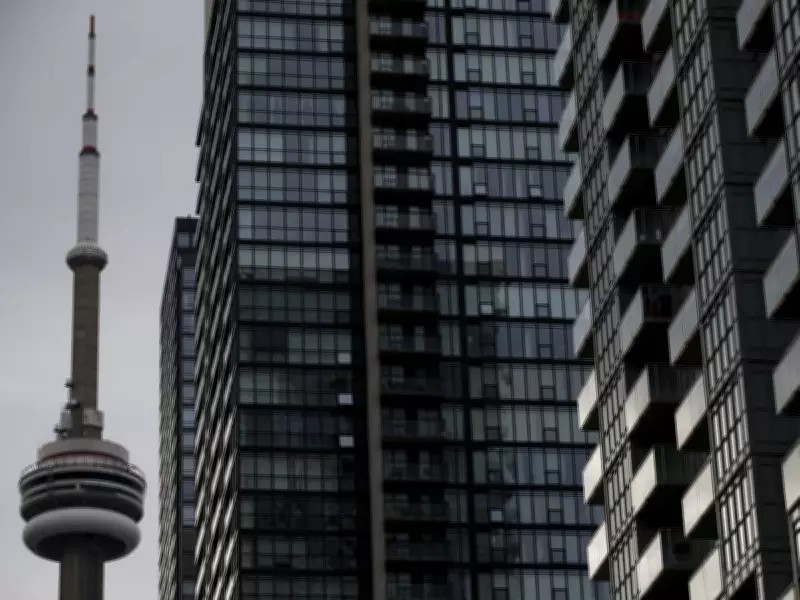
Toronto Condominium Market Reaches Historic Low Point Amid Sales Collapse
Canada's largest condominium market has officially "hit bottom" according to industry experts, with first-quarter sales for new Toronto projects plunging 52% from the previous year to reach a 35-year low. The dramatic downturn was documented in a recent Urbanation Inc. report that revealed no new condo projects were launched during the period for the first time in three decades.
Market Comes to Complete Standstill
Shaun Hildebrand, president of Urbanation, emphasized the unprecedented nature of the market freeze. "What stood out here was that there was for the first time in decades zero new project launches; the market basically came to a standstill," Hildebrand stated. "It's probably safe to say that we've hit the bottom."
The Greater Toronto and Hamilton area condominium market has endured a five-year slump characterized by swelling completions and collapsing sales. This prolonged downturn has been driven by multiple factors including higher interest rates, a sluggish economy, and persistent economic uncertainty that has chilled buyer enthusiasm.

Record Inventory and Price Disparities
Urbanation's comprehensive report revealed that 4,295 condos were completed and remained unsold during the first quarter, representing a record high inventory level. The report noted there were "92 months of completed new condo supply on the market," a staggering figure that doesn't even account for pre-sold units where buyers failed to complete their purchases.
Additionally, 8,629 unsold new condos are currently under construction and scheduled for completion within the next couple of years, further exacerbating the supply glut. The price disparity between new and resale condos has reached dramatic proportions, with new condos averaging $1,189 per square foot compared to resale units at $859 per square foot—a 38% difference.
Developers Forced to Sell at Losses
Hildebrand confirmed that some developers are taking extraordinary measures to move inventory, including lowering prices to the point of financial loss. "Some are more willing than others to let these units go for a significant discount compared to what they were sold for previously," he explained.
The situation has become so dire that Hildebrand believes new condo prices will need to match resale prices for the market to recover, which would require dropping prices below construction costs. "(Condo developers) are losing money by bringing prices that low," he acknowledged.
Potential Relief Measures and Future Outlook
A new HST rebate announced by Ontario in late March is estimated to reduce condo prices by approximately $100,000 on average, narrowing the price gap between new and resale units to about 20%. Historically, under healthier market conditions, this gap would typically range between 10% and 15%.
Hildebrand expects some developers will opt to rent out their condo units instead of selling, as the new HST rebate rules permit this strategy. Additionally, falling inventory levels may provide some stabilization to the troubled market. Urbanation projects that 21,850 units will be completed in 2026, down significantly from 29,616 units in 2025 and 29,924 units in 2024. The firm anticipates this number will continue declining throughout the decade, potentially reaching around 2,000 completions by 2029.
"That's the biggest drop in supply we'll ever experience," Hildebrand noted. "That should help to stabilize the market." The combination of government intervention, developer adaptation strategies, and natural market corrections may eventually pull Toronto's condominium sector out of its historic slump, though significant challenges remain in the immediate future.