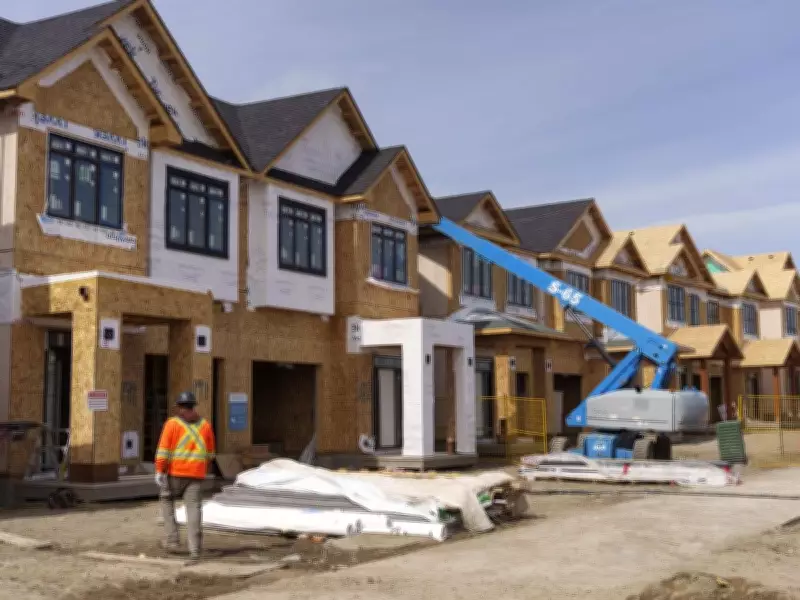
Calgary's once-tight housing landscape has undergone a substantial transformation, with multi-family housing experiencing the most pronounced shift as unprecedented development activity introduces thousands of new units to the market.
Unprecedented Supply Growth Reshapes Market Dynamics
A remarkable construction boom throughout 2024 and 2025, heavily concentrated in multi-family rental properties, has injected more than 50,000 new housing units into Calgary's inventory, according to the recent Canada Mortgage and Housing Corporation Housing Market Outlook 2026. The report further anticipates an additional 23,000 to 30,000 housing starts potentially materializing this year, continuing the supply expansion trend.
"Demand has dropped off significantly for new homes," states Taylor Pardy, lead economist for the Prairies at CMHC. "We're still seeing a pace of absorption of new homes that is fairly strong, but it's just a situation where supply is significantly outrunning demand."

Multi-Family Sector Experiences Most Pronounced Adjustment
This supply-demand imbalance is particularly evident within the multi-family segment, encompassing purpose-built rental properties, condominium apartments, and townhomes. Many ownership units were specifically constructed with investors in mind, intended for Calgary's substantial secondary rental market. The surge in new ownership properties and purpose-built rentals—initiated during the post-pandemic period of elevated migration—is now contributing substantial supply, leading to significant adjustments in the resale market.
"We're definitely seeing more balanced conditions for resale," Pardy confirms. "There's more choice."
Statistical Evidence Reveals Market Cooling
Recent data from the Calgary Real Estate Board illustrates this cooling trend. February statistics show total resales declined approximately 11 percent year-over-year. Compared to February 2024, sales have plummeted nearly 29 percent. The apartment market segment has experienced the most dramatic downturn, with sales dropping 27 percent year-over-year and falling almost 46 percent from 2024 levels, when real estate activity surged alongside high migration patterns.
Concurrently, overall housing inventory has increased by 16 percent, providing buyers with substantially more options than were available during the previous market peak.
Investment Patterns and Vacancy Rate Projections
"That influx of money post-COVID and record population growth were huge drivers," explains Jasmine Young, vice-president of advisory at Zonda, a market data firm monitoring Canada's multi-family sector. "Certain developers were even marketing their Calgary projects in Toronto."
Young notes these were condominium projects specifically pitched to Ontario investors, representing an attractive proposition in 2024 when vacancy rates hovered below two percent. The current landscape presents a stark contrast, with vacancy rates now at five percent and projected by CMHC to exceed six percent by 2027.
Zonda's analysis of Calgary's new multi-family ownership market during the final quarter of 2025 reveals rising inventory across concrete apartments, wood frame apartments, and new townhomes. Notably, townhome inventory levels have reached parity with wood frame apartment inventory, indicating broad-based supply increases across multiple housing types.
The combination of record development activity, shifting migration patterns, and evolving investor sentiment has fundamentally altered Calgary's housing equation, creating a more balanced market environment characterized by increased choice for consumers and moderating price pressures across the multi-family sector.