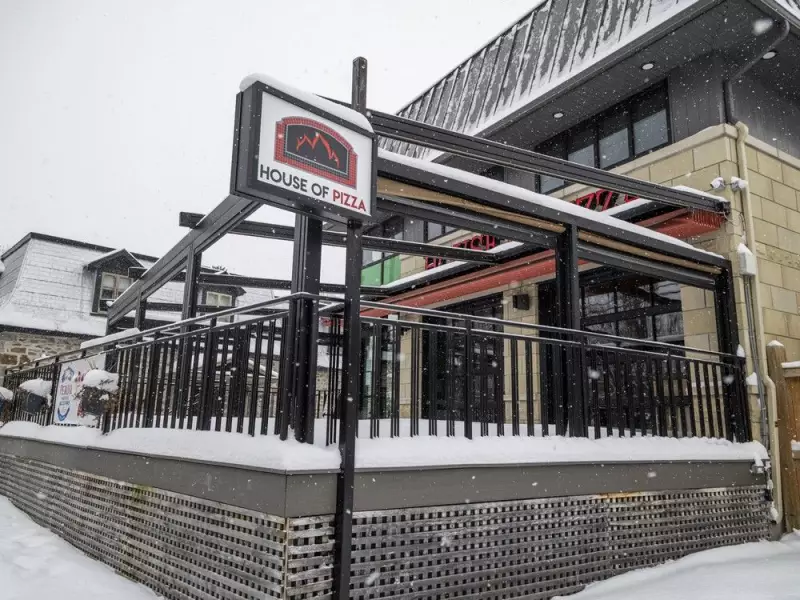
A beloved Ottawa family pizza restaurant has been awarded close to $400,000 to cover its legal and expert fees, following a protracted battle with the City of Ottawa over a property expropriation for the Light Rail Transit (LRT) system.
A Business Uprooted for City Infrastructure
Gabriel Khater, the owner of House of Pizza, was forced to relocate his business in January 2020. The city expropriated the strip mall at 747 Richmond Rd. where his shop was located to make way for Phase 2 of the LRT. Khater moved his operation to a new space at 160 Richmond Rd., a process he described as complicated because he had to purchase the new property and undertake significant renovations to convert it from general commercial use to a restaurant.
The city's initial offer to all commercial tenants in the expropriated mall was a blanket $100,000, intended to cover all damages, interest, and legal costs. Unwilling to accept this, Khater retained legal counsel and a team of experts to pursue a claim for disturbance damages under Ontario’s Expropriation Act.

Years of Negotiation and a Last-Minute Settlement
Negotiations between Khater and the city dragged on for years. Finally, in December 2023, just six days before a scheduled six-day hearing before the Ontario Land Tribunal (OLT), the two parties reached a settlement. The city agreed to pay Khater $50,000 in compensation, plus his reasonable costs.
The dispute, however, was far from over. The central conflict then shifted to defining what constituted "reasonable costs." Khater’s legal team submitted a claim for $401,387.18, plus interest, to cover legal, appraisal, and consulting fees. The City of Ottawa countered with a starkly different figure, proposing a partial-indemnity calculation of just $72,448.96.
City's Cost Challenge Rejected by Tribunal
The city filed a costs motion with the OLT, arguing that Khater had acted unreasonably and that his experts relied on flawed assumptions, making his original damages claim weak. City lawyers contended that if the matter had proceeded to a full hearing, Khater would have lost on the damages claim, and therefore the city should either pay drastically reduced costs or even recover its own legal expenses from him.
In a decision published in October 2025, Ontario Land Tribunal Vice-Chair William Middleton firmly rejected the city's position. He ruled that the tribunal could not retroactively assess the strength of Khater's damages claim or evidence because a hearing never took place. To do so, Middleton wrote, would be "procedurally unfair and legally unfair," as it would require deciding on compensation without a proper hearing.
The key finding was that municipal authorities cannot settle a case first and then litigate the costs later in an attempt to drastically reduce what they agreed to pay. Once a settlement is reached, the tribunal's role is limited to ruling on the costs incurred from that settlement agreement. Middleton's decision upheld the principle that a settlement is a final agreement, preventing the losing party from reopening the substantive issues.
This ruling not only provides financial vindication for Gabriel Khater and House of Pizza after a stressful multi-year ordeal but also sets a significant precedent for other small businesses facing similar expropriation proceedings by municipal governments in Ontario.