A recent opinion piece by an Edmonton developer on infill housing and parking has ignited a fiery response from residents, highlighting the ongoing tension between new urban development and established community norms in Alberta's capital.
Developer's Claims on Parking and Property Values Challenged
In a letter published in the Edmonton Journal on Tuesday, December 16, 2025, resident G.S. Bartosh directly countered arguments made by developer John Clarke. Clarke had previously asserted that homes in older neighbourhoods average around $380,000 and may not generate sufficient tax revenue for city services.
Bartosh strongly disputes this valuation, suggesting Clarke examine prices in areas like Glenora, Windsor Park, Garneau, Riverbend, and Greenfield. The letter argues that neighbourhoods over 40 years old typically have significantly higher average home values precisely because they are desirable. Furthermore, Bartosh points out these communities have successfully funded their municipal services for decades.

The Core Issue: On-Street Parking for Infill Projects
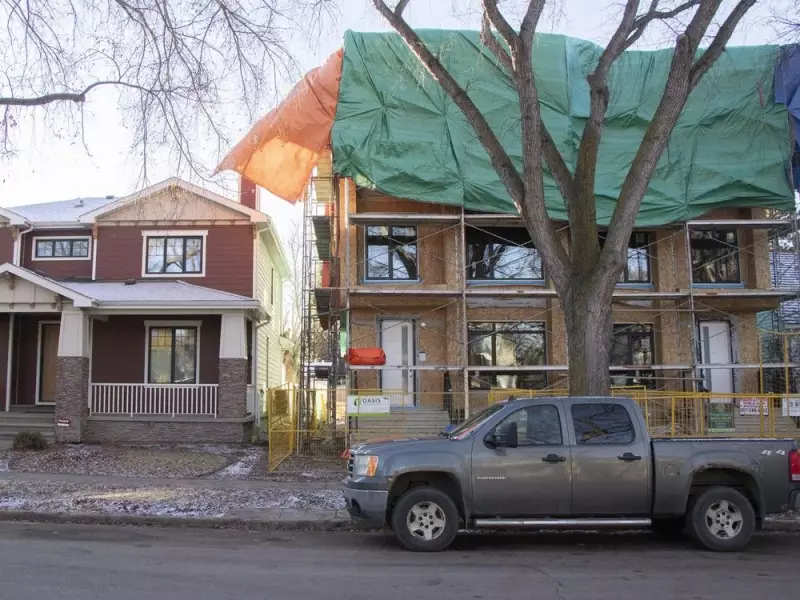
The heart of the controversy lies in parking provisions for new multi-plex developments. Bartosh notes that because infill projects are not required to provide off-street parking, new residents inevitably rely on public street space. The letter references a specific multi-plex under construction on 73 Avenue near 110 Street in the McKernan neighbourhood, photographed in November 2025.
The resident takes issue with Clarke's suggestion that on-street parking should come with a daily fee and questions Clarke's personal anecdote about his own street being "always void" of parked cars. Bartosh speculates that this could change dramatically once nearby infill projects, potentially including eight-plexes, are completed and occupied.
A Broader Call for Guardrails in Another Policy Arena
The same letters section also featured a follow-up on another contentious Alberta issue: private health care. The author, who previously argued in favour of allowing a hybrid private-public model for doctors on November 25, emphasizes the need for strong regulations.
While seeing potential benefits, the writer warns that private health care will not solve the core problems of insufficient primary care resources and unacceptable wait times. There is a clear risk it could distract government attention from the public system. The letter calls for concrete "guardrails" and policy constraints to ensure the private sector complements rather than undermines universal public health care, holding the government to more than verbal promises.
These paired letters underscore two major, ongoing policy debates in Alberta—urban development and healthcare reform—where residents are demanding more nuanced solutions and stronger protections for existing systems.