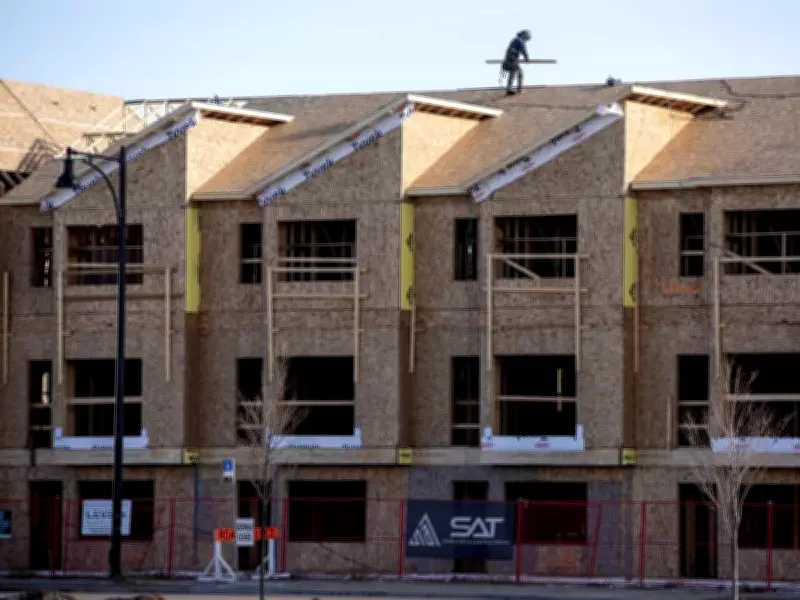
Edmonton's Housing Strategy Sidesteps National 'Missing Middle' Crisis
While Canada's largest urban centers grapple with a severe shortage of affordably priced family homes, Edmonton has emerged as a notable exception. The city has successfully avoided the "missing middle" housing problem that plagues markets like Toronto and Vancouver, thanks to a combination of strategic policies and geographic advantages.
What Is the 'Missing Middle' in Housing?
"The 'missing middle' refers to the critical shortage of ground-oriented housing types that bridge the gap between single-family detached homes and high-rise apartments," explains Taylor Pardy, lead economist for Prairies Canada Mortgage and Housing Corp. This category includes townhomes, fourplexes, low-rise apartments, secondary suites, and laneway homes—precisely the housing forms that have been underbuilt for decades in many Canadian cities.
The CMHC's Spring 2026 Housing Supply Report reveals that builders across Canada are increasingly focused on addressing this housing gap. However, Edmonton and Calgary stand out as exceptions where ground-oriented construction has been consistently strong while other major metropolitan areas have struggled to add this type of supply.

Edmonton's Exceptional Performance
Edmonton's housing market has long defied national trends, and 2025 was no exception. Middle housing starts reached nearly 12,000 units last year, representing nearly 60 percent of all new construction activity in the city.
"A huge part of missing middle housing is providing more suitable space for families at lower price points than the typical single-family detached home as people move through their housing life cycle," Pardy emphasizes.
The city's completions reached record levels in 2025, with apartments comprising the majority of new home activity. Yet single-family home construction has also grown substantially, creating a diverse housing ecosystem.
Factors Behind Edmonton's Success
Several key factors contribute to Edmonton's ability to maintain housing affordability and diversity:
- Favorable zoning regulations that permit diverse housing types
- Downtown revitalization initiatives that create mixed-use neighborhoods
- Infill development opportunities that maximize existing urban space
- Geographic advantages unlike Vancouver's ocean-and-mountain constraints
"In Edmonton, new home inventory has increased not only for single detached, but also for semi-detached and row housing—essentially across the board for ground-oriented housing," Pardy notes.
Contrast with Other Markets
The situation differs dramatically in other parts of Canada. "Particularly in high-cost markets like Toronto and Vancouver, the residential construction industry has underbuilt the missing middle for decades," says Derek Goring, chief executive officer of Northcrest Developments, a major Ontario builder.
Goring points to his company's development on the former Downsview Airport lands in Toronto, which includes townhomes and mid-rise apartments, as an example of efforts to address this gap. "We see this as an opportunity to rethink how neighborhoods are planned," he adds.
Edmonton, in contrast, benefits from ample low-rise apartment development alongside new row housing, often viewed as a more affordable entry point than single-family detached homes. The resale market also offers better value compared to other major cities.
Affordability Metrics
Recent statistics from the Realtors Association of Edmonton reveal that the average price of a single-family detached home in February was slightly above $571,000, representing only about a one percent increase from 2025 levels. This modest appreciation stands in stark contrast to the double-digit percentage increases seen in many other Canadian urban centers.
Edmonton's approach to housing development demonstrates how thoughtful urban planning, favorable regulations, and geographic advantages can combine to create a more balanced and affordable housing market even as other cities struggle with severe shortages of middle-density housing options.