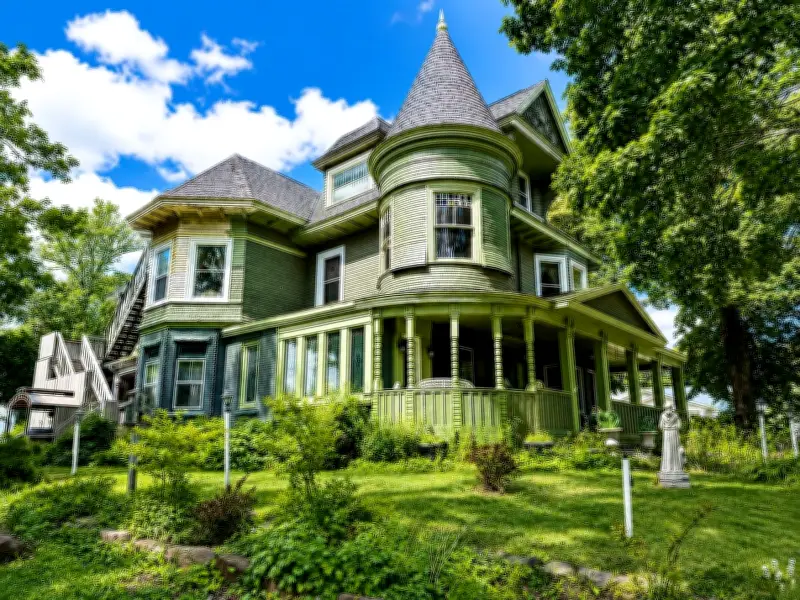
There's something undeniably romantic about a run-down mansion. Maybe it's that sweeping staircase hidden beneath decades of dust, or perhaps the stained-glass, original fireplaces or the vintage style insta-worthy kitchen. But the reality of taking on a large-scale fixer-upper can be rather more complicated.
The Allure and the Reality
Many historic homes were built during an era when craftsmanship mattered more than speed, with hand-carved mouldings, intricate plasterwork and hardwood panelling that would be prohibitively expensive to replicate in today's economy. For enthusiasts, restoration can feel less like renovation, and more like archaeology, with every layer peeled away revealing more about the subject home's story.
There's also the question of value. Tired homes may seem to offer remarkable square footage for their price points, with all manner of perceived benefits for less than a newly built luxury property, though the crucial point is purchase price. Priced at $539,000, the Amherst, N.S., home featured is a solid example of an opportunity waiting to happen.

The Hidden Costs of Renovation
Whilst initial acquisition may appear affordable, renovation costs can spiral. A peeling ceiling mightn't simply require paint; it could point to structural movement, roof failure or decades of water damage. Old electrical systems may need to be replaced, heating systems could be obsolete, and roofs might require repairs costing tens of thousands of dollars.
Experienced renovators routinely advise adding a 20 to 30 per cent contingency to a regular project's predicted budget, but with large historic homes, even that figure may prove optimistic. A salutary reminder – on a personal note – was the refurbishment of our former home in Glasgow, Scotland, a 7,000 square feet Georgian abode, whose repair ended up costing 60% more than our initial estimate.
Ongoing Expenses and Heritage Considerations
Beyond refurb' costs, ongoing bills can be prohibitive. Historic mansions were often built before energy efficiency became a priority. Single-pane windows, large rooms and aging insulation can make heating and cooling expensive. Once renovation dust settles, owners often discover that maintenance becomes a permanent part-time job.
Heritage designation can complicate matters. Whilst protected status may indeed preserve character – and occasionally unlock grants or incentives – it can come with restrictions. Replacing windows, altering facades or making structural changes often requires approval from heritage authorities. Resultantly, projects can take longer, cost more and involve extra paperwork.
Balancing Passion with Practicality
Part of the appeal, as we see it certainly, is emotionally driven: rather than simply renovating, owners become custodians of history as they bring neglected craftsmanship back to life. Conversely, emotion can be dangerous. Falling in love with extra rooms, sweeping staircases or a magnificent façade makes it easy to overlook financial realities.
The smartest buyers balance passion with practicality, via inspections, work appraisals, and preparing for costs that can quickly exceed expectations. If looking for a low-maintenance home with predictable expenses, a run-down mansion mightn't be appropriate. But if you're passionate about architecture, and financially prepared for surprises, the rewards can be extraordinary.
Watch 'Small Town Escapes with Colin and Justin' on HGTV. Discover the 'Colin+Justin Home Collection' at Homesense and Winners. Follow them on Instagram and Facebook.