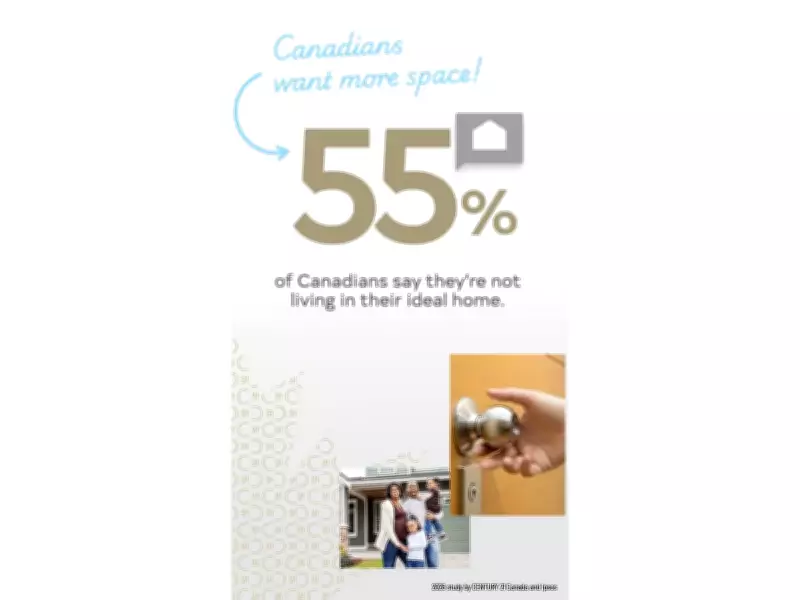
A comprehensive new study conducted by Ipsos for Century 21 Canada has uncovered a significant housing gap across the nation, with more than half of Canadians reporting they are not living in their ideal home. The research, released in March 2026, highlights widespread dissatisfaction with current living arrangements and reveals clear preferences for larger, detached properties that many find financially out of reach.
The Great Canadian Housing Disconnect
The study found that exactly 55 percent of Canadians acknowledge their current living situation falls short of their ideal home aspirations. This substantial majority expresses a desire for more substantial living spaces, with the average Canadian aspiring to approximately 2,098 square feet of living area, three bedrooms, and 2.5 bathrooms. These preferences starkly contrast with current realities, where 13 percent of Canadians reside in homes smaller than 500 square feet, yet only 4 percent consider that size ideal for their needs.
Space and Ownership Preferences
When examining specific housing preferences, the data reveals a strong inclination toward traditional single-family homes. Well over half of respondents, specifically 59 percent, identified a single detached house as their ideal living arrangement. This represents an 8 percentage point gap from the current reality, where 51 percent of Canadians actually live in such properties. Meanwhile, only 12 percent of Canadians view low-rise condominiums or apartments as ideal, despite 16 percent currently residing in such dwellings.

The research also uncovered a significant satisfaction divide between homeowners and renters. An impressive 80 percent of homeowners report loving their current home and considering it perfect for their needs, compared to just 50 percent of renters who feel similarly satisfied. This 30-point gap underscores the emotional and practical benefits many associate with homeownership beyond mere financial investment.
Affordability Barriers and Future Intentions
Not surprisingly, more than half of study participants identified affordability as the primary barrier preventing them from achieving their ideal living situation. Despite these financial challenges, nearly one-fifth of Canadians, approximately 19 percent, indicate they are at least somewhat likely to purchase a new home within the next year. Among this group, 55 percent would be first-time buyers entering the market for the first time.
Those planning to purchase within the coming year report an average budget of $677,000, which falls just below Statistics Canada's reported average house price of $698,881. This narrow gap between aspiration and reality highlights the financial pressures facing prospective homebuyers across the country.
Expert Perspectives on Housing Trends
Todd Shyiak, Executive Vice President of Century 21 Canada, commented on the findings, noting that "the Canadian dream of owning a moderate stand-alone house with a few bedrooms for family and a yard is as relevant today as it ever has been." He observed that these preferences help explain why "many moderately-priced communities just outside metro centres are experiencing a real estate boom" as Canadians seek affordable options that meet their space requirements.
Sean Simpson, Senior Vice President of Ipsos Public Affairs, emphasized the emotional dimension revealed by the research. "What struck me in the results is the satisfaction gap between owners and renters," Simpson stated. "That 30-point gap helps explain why homeownership remains the goal for most Canadians – it's not just about building equity, it's about finding a place that truly feels like home."
Additional Study Highlights
The research provides further insights into current Canadian housing realities:

- 45 percent of Canadians report their current living situation as ideal or very close to ideal
- 54 percent own their home, while 37 percent rent, with the remainder living in various other arrangements
- Only 8 percent of Canadians live in homes exceeding 3,000 square feet, yet 19 percent would consider that size ideal
- Along with size and condition, neighborhood characteristics and larger yards ranked highly as important factors in defining an ideal home
The study demonstrates that while the traditional Canadian housing ideal remains strong, significant gaps exist between aspiration and reality for a majority of citizens. These findings come at a time when housing affordability continues to dominate national conversations about economic security and quality of life across the country.