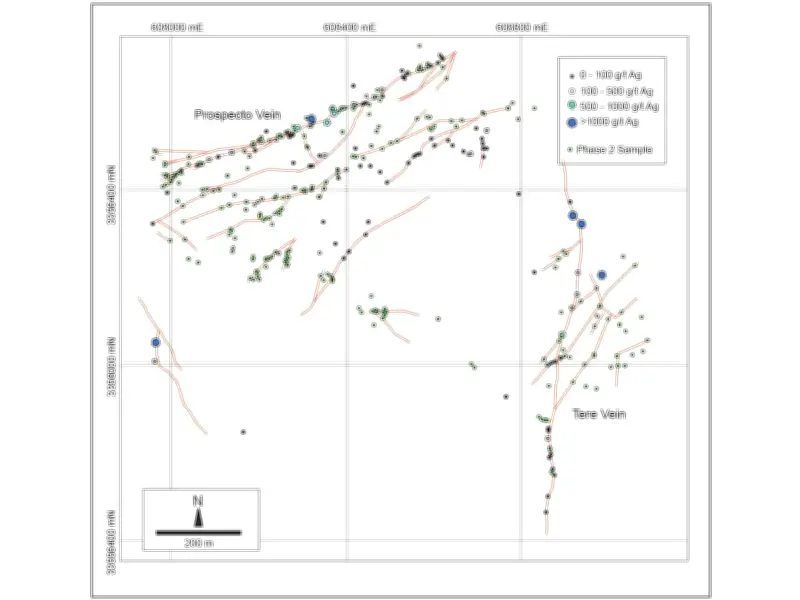
Zacatecas Silver Corp. (TSXV: ZAC | OTCQB: ZCTSF | FRA: 7TV) has announced the completion of a second phase of rock chip grab sampling and vein mapping at the Oso Negro project in Sonora, Mexico. The program, finished in the first week of July 2026, involved cutting, photographing, and dispatching samples to ALS for gold, silver, and base metal analysis.
Phase Two Sampling Details
Geological mapping during phase two identified additional vein extensions at both the Prospecto and Tere vein low sulphidation epithermal systems. The Prospecto vein system now spans over 2.5 strike kilometres of mapped veins, while the Tere vein comprises approximately 0.5 strike kilometres. A total of 391 rock-chip grab samples were collected primarily from vein outcrop at both systems. Veins are up to 3 metres wide, multiphase, with common vein breccias and pervasive iron oxides after sulphides.
The focus of this exploration phase was to refine the positioning of planned angled diamond drill targets. The company has identified 20 drill pad locations and completed ecological studies as a prerequisite for applying to SEMARNAT for a drill permit. An update on drill plans is expected shortly.

Phase One Results Context
The phase one rock chip sampling program at Oso Negro returned up to 14.8 g/t gold and 2,340 g/t silver across 156 samples, as reported in a June 9, 2026 news release. The phase two program confirmed the presence of extensive sulphidic quartz veins, which has significant implications for exploration drilling focusing on near-surface depth extensions through a large number of shallow angled holes.
Vein Textures and Mineralization
Rock chip grab samples included pervasively silicified and oxidized tuffs with abundant hematite and goethite infilled fractures, hematite-stained multiphase quartz veins with abundant boxwork hematite and goethite after sulphides, and saccharoidal quartz with blebby iron oxides. Multiphase, dark grey sulphidic vein quartz with silicified tuff fragments and hematite-goethite fracture infill, as well as massive dark grey sulphidic vein quartz with blebs of pyrite, void-filling iron oxide boxworks after sulphides, and localized hematite-goethite bands were also present.
According to the company, vein textures are typical of the uppermost levels of a low sulphidation epithermal system, where precious metal mineralization is commonly preserved in association with a boiling zone at depth. Phase one sampling indicated high gold and silver grades in outcropping vein samples.