Opus One Gold Corp Announces Positive LIBS Study Findings from Noyell Project's Zone 1
MONTREAL, Feb. 24, 2026 – Opus One Gold Corp (TSX-V: OOR) has released promising results from a Laser Induced Breakdown Spectrometry (LIBS) study conducted on its Noyell gold project in Abitibi, Quebec. The study, part of a metallurgical evaluation program, focused on Zone 1, a key gold discovery area, and utilized ECORE's ELEMISSION LIBS technology to analyze drill core samples from the winter 2025 drilling campaign.
Study Details and Objectives
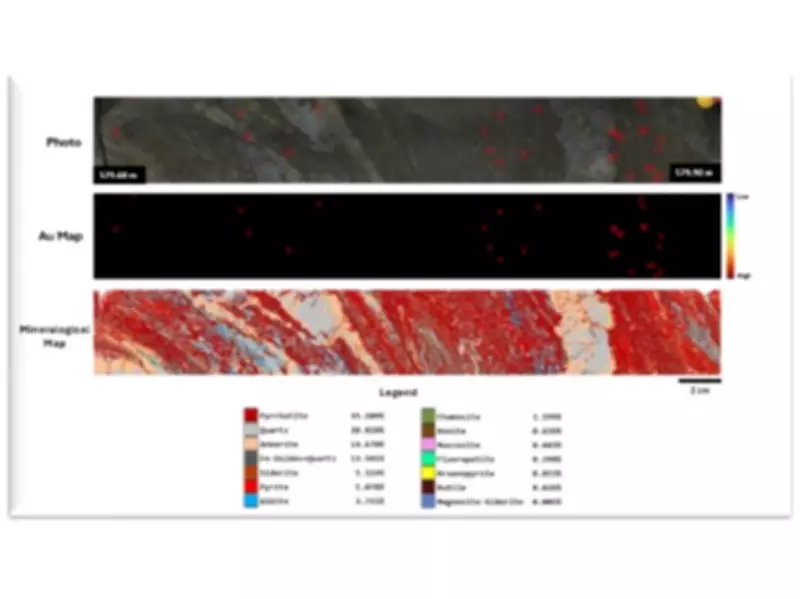
The LIBS analysis was performed on mineralized core from drill holes NO-25-07 and NO-25-13, with the latter representing the deepest high-grade interval identified in Zone 1 to date. The primary goal of the study was to identify mineralogical associations and correlations within the mineralized zones. Specifically, Opus One aimed to determine which minerals are directly linked to precious metals, such as gold and silver, and to define alteration minerals and patterns within Zone 1 and its surrounding areas.
Key Findings from the LIBS Analysis
The results revealed a strong relationship between precious metals—gold and silver, which were consistently observed together—and sulfide minerals. The most abundant sulfide mineral identified was pyrrhotite, followed by lesser amounts of arsenopyrite and pyrite. Precious metals were found in association with or in proximity to pyrrhotite, arsenopyrite, quartz, ankerite, sericite, and, to a much lesser extent, albite. These minerals, including quartz, ankerite, sericite, and albite, form the alteration assemblage typical of Zone 1, with consistent observations across both near-surface and deeper mineralization.

Additionally, the study noted that Zone 1 is bordered by an alteration assemblage consisting of chlorite, iron oxide, siderite, and quartz, highlighting a distinct alteration pattern within the mineralized zone compared to its periphery.
Implications for Gold Recovery and Project Future
The findings are particularly encouraging as they suggest that gold is present in a free state, associated with multiple minerals rather than being encapsulated within a specific mineral. This indicates that gold could be easily liberated during the milling process, potentially leading to high recovery rates. While further metallurgical studies will be necessary to quantify precise recovery rates for precious metals, this initial study points to a promising outlook for the Noyell project's development.
Ongoing Drilling Activities and Future Plans
Opus One is currently engaged in its drilling season, with numerous targets identified to infill and extend Zone 1 in all directions. The company also plans to test new areas in the western portion of the property, where significant gold was reported in drill records from the 1980s and 1990s by previous operators. If weather conditions permit, the 2026 drill program aims to complete approximately 13,000 to 14,000 meters of core drilling across 26 holes. The permitting process is fully secured, with three drill rigs currently operational on the property.
For reference to the 2025 drill results, Opus One directs stakeholders to its press releases issued on September 08, 2025, July 15 and 29, 2025, June 02, 10, and 16, 2025, and May 12, 21, and 26, 2025.