Two Major Uranium Mining Projects Receive Federal Construction Approval in Northern Saskatchewan
After a rigorous seven-year journey from initial environmental assessments to final regulatory clearance, two significant uranium mining projects in northern Saskatchewan have now received federal approval to commence construction. This development represents the first new uranium mine construction approvals in Saskatchewan since 2004, signaling a potential resurgence in the province's uranium sector.
Regulatory Milestones Reached for Wheeler River and Rook I Projects
The final regulatory hurdle was cleared on February 19 for Denison Mines Corp.'s Wheeler River Project, followed by NexGen Energy Ltd.'s Rook I Project on March 5. Both projects are situated within the uranium-rich Athabasca Basin in Saskatchewan's northern region, an area renowned for its high-grade uranium deposits.
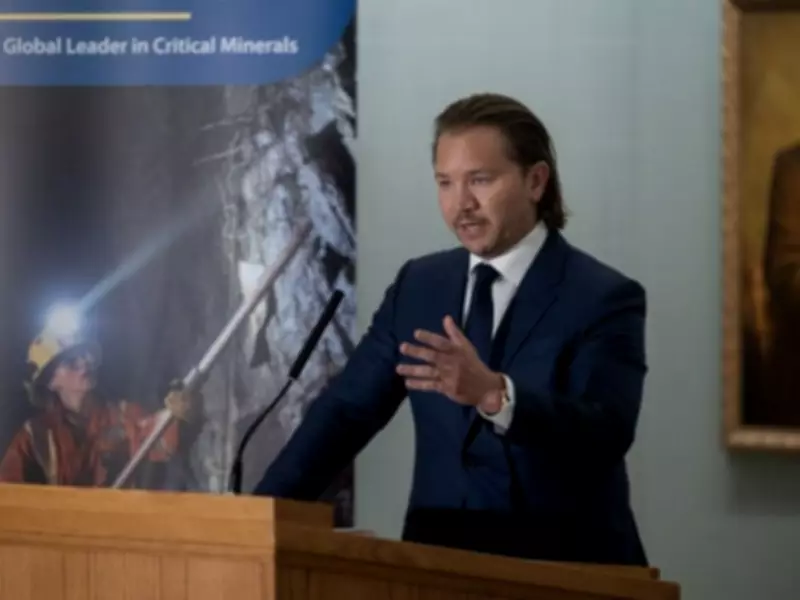
Travis McPherson, chief commercial officer of NexGen Energy, emphasized the lengthy development timeline during a recent news conference at the Saskatchewan legislature. "There's just not enough uranium fuel going around, so thank goodness we were doing the work we were doing back in 2011, 2013, 2014 when we made the discovery because it does take a long time to bring the fuel into a reactor," McPherson stated.

Timing Aligns with Growing Global Nuclear Energy Demand
These approvals come at a pivotal moment when global demand for uranium is increasing as nations seek cleaner energy alternatives to carbon-emitting sources. The radioactive metal is essential for powering nuclear reactors, which are gaining renewed attention as part of decarbonization strategies worldwide.
McPherson and Denison Mines president and CEO David Cates appeared together at the Saskatchewan legislature to celebrate these long-anticipated additions to the province's uranium mining industry. The last Saskatchewan project to receive construction approval from the Canadian Nuclear Safety Commission was Cameco Corporation's Cigar Lake site in 2004, making these new approvals particularly significant.
Saskatchewan's Broader Nuclear Energy Strategy
Saskatchewan has been actively positioning itself within the growing nuclear energy movement. The province recently announced plans for a Small Modular Reactor Safety, Licensing, and Testing Centre at the University of Regina, which will be the first facility of its kind in Western Canada. Additionally, the province is exploring the construction of its first Small Modular Reactor in the Estevan area in the coming years.
Jeremy Harrison, the minister responsible for SaskPower, revealed that the province has been engaged in discussions with the federal government about partnering on a national energy grid and aligning nuclear power strategies to meet net-zero electricity system targets by 2050. "I think that this is something really that can unify and bring the country together," Harrison told the Regina Leader-Post.
Complex Approval Process for Nuclear Projects
The regulatory pathway for nuclear sector projects remains extensive and thorough, typically requiring more than a decade of site exploration studies and compliance with stringent environmental and safety requirements before uranium can be mined and processed into fuel for nuclear power plants.
While the federal government under Prime Minister Mark Carney has expressed intentions to fast-track infrastructure and mining projects of national interest, the specific implications for the nuclear industry remain uncertain. McPherson noted that any acceleration of Small Modular Reactor and nuclear energy projects would likely increase demand for uranium, potentially benefiting mining operations like those now approved in Saskatchewan.
These developments underscore Saskatchewan's continued importance in the global uranium supply chain and highlight the complex interplay between resource development, regulatory processes, and evolving energy policies as Canada and other nations pursue cleaner energy solutions.