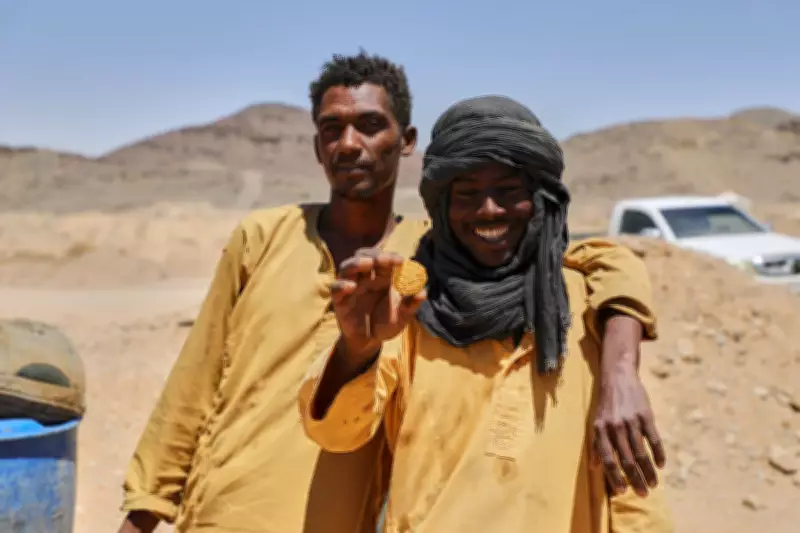
In Sudan's war economy, gold keeps flowing as miners risk mercury and collapse. Despite the ongoing conflict and economic turmoil, artisanal miners continue to extract gold under hazardous conditions.
The Perils of Artisanal Mining
Miners like Atta al-Khazin work in makeshift mines, often using mercury to separate gold from ore. This practice exposes them to toxic mercury vapors, leading to severe health issues. Tunnel collapses are also a constant threat, with many miners losing their lives or suffering injuries.
Economic Pressures Drive Miners
Despite the risks, many Sudanese turn to gold mining as a means of survival. The war has devastated the economy, leaving few alternatives for income. Gold remains a valuable commodity, and its extraction provides a lifeline for countless families.

The gold trade often funds armed groups, perpetuating the cycle of violence. International efforts to regulate the trade have had limited success, as gold is easily smuggled across borders.
Environmental and Health Impacts
Mercury used in mining contaminates water sources and soil, affecting entire communities. Health officials report rising cases of mercury poisoning, with symptoms including neurological damage and respiratory issues. The lack of protective equipment exacerbates the problem.
Call for Action
Humanitarian organizations urge the international community to address the crisis. They call for safer mining practices, better regulation, and support for alternative livelihoods. However, progress remains slow amid the ongoing conflict.
As Sudan's war continues, the gold that enriches some brings suffering to many. The miners who risk their lives each day are a stark reminder of the human cost of conflict-driven economies.