The leader of one of Canada's biggest oil companies has strongly criticized a government push for a massive carbon-capture project and carbon tax in exchange for an oilsands pipeline, calling it uneconomical and unfinanceable.
Cenovus CEO speaks out
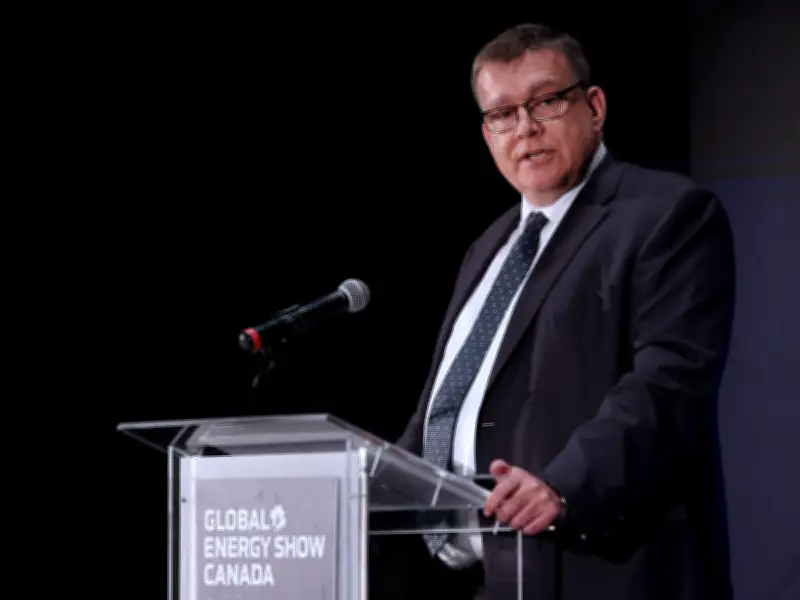
Cenovus Energy Inc. chief executive Jon McKenzie said Tuesday that the deal fails to address regulatory barriers to the industry's capital spending. Speaking at the Global Energy Show in Calgary, McKenzie argued that without fundamental capital investment, neither the Pathways carbon-capture project nor the proposed west coast pipeline makes sense.
In May, Canada's government and Alberta agreed on steps and a timeline for a potential new west coast oil pipeline. Prime Minister Mark Carney has said that the Pathways carbon-capture project, which could cost as much as $30 billion, is a central condition for that new oil infrastructure.

Pipeline unfinanceable
McKenzie delivered one of the strongest rebukes of the so-called 'grand bargain' between Carney and Alberta Premier Danielle Smith, which ties a pipeline to emissions-abatement policies. He told the audience that under the current regulatory framework, the 'pipeline is unfinanceable' by the private sector.
The Alberta-Canada deal is partly aimed at fixing the province's malfunctioning carbon market. The province agreed to annual increases in the headline price on carbon. However, credits and offsets were trading last week at around $32 per metric tonne of CO2, well short of target prices and down from about $40 per metric tonne when the deal was announced.
Contrasting views
McKenzie's comments stood in stark contrast to an earlier speech from Canada's Energy Minister Tim Hodgson, who touted the pact with Alberta as establishing 'a carbon market that works' to give investors long-term certainty, and 'a practical middle ground.' Hodgson said that if Canada can cut carbon intensity in one of the world's major oil-producing regions, it will show that energy production and emission reduction can move forward together.
Premier Danielle Smith echoed Hodgson in a speech of her own, stating that there is increasing scrutiny and concern about how energy is produced. She added that Alberta would focus on maintaining a stable, reliable supply of energy while continuing to reduce emissions and support innovation.
Industry concerns
The Alberta-Canada deal did not address how the industry would ship an extra million barrels of oil a day while also spending capital on the Pathways project, McKenzie said. No agreement on the project has been reached. Smith's Alberta government is currently the proponent of the new oil pipeline to the Pacific coast. Her deal with Carney says the pipeline could be designated a project of 'national interest' and construction could start as soon as September 2027.
Cenovus's McKenzie argued that the certainty the Alberta-Canada deal provides is that it shows Canada is 'increasingly out of step and uncompetitive.' The deal fails to address the regulatory barriers that hinder capital spending in the industry, making large-scale projects uneconomical.