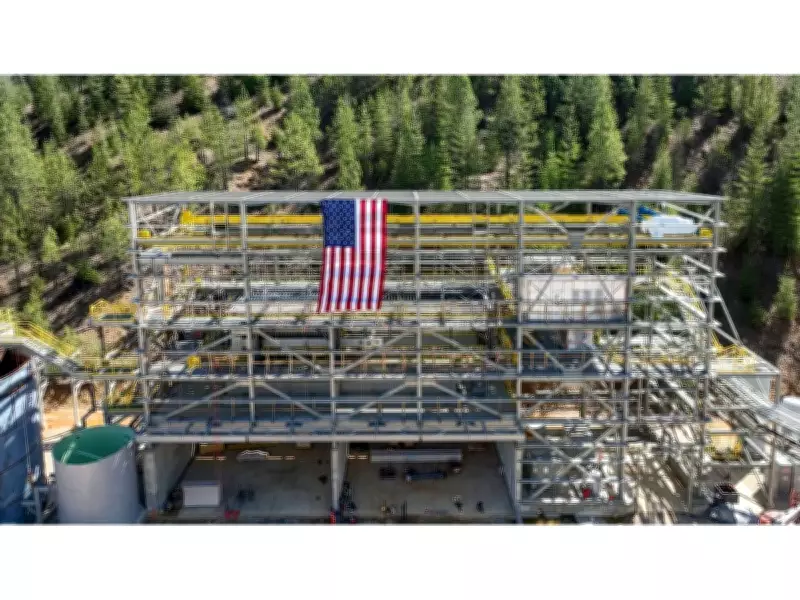
KELLOGG, Idaho and VANCOUVER, British Columbia – Bunker Hill Mining Corp., trading under TSX: BNKR and OTCQB: BHLL, has announced significant progress toward the anticipated June 2026 restart of its Bunker Hill Mine located in Idaho's historic Silver Valley. The company released a comprehensive corporate update highlighting safe advancement through commissioning phases and detailed operational preparations.
Commissioning Progress and Production Pathway
The company continues to methodically advance commissioning activities across essential operational circuits, with recent focus areas including mill operations, filter plant functionality, and comprehensive systems testing. These critical milestones represent the transition from construction completion to active mining operations.
Sam Ash, CEO and President of Bunker Hill Mining Corp., emphasized the project's trajectory, stating: "As our expanding team continues to execute safely according to plan, we remain firmly on track for the Bunker Hill mine restart in June. This initiative will deliver crucial metals into the U.S. supply chain while creating valuable domestic mining employment opportunities during a period of strategic importance."

The commissioning process follows a disciplined, sequential approach designed to validate system performance, optimize material throughput, and mitigate operational risks before initial production commences. These systematic validation efforts align with internal projections and operational expectations.
Updated Mining Methodology
Access and Infrastructure
Bunker Hill will access all underground mining areas through the recently enlarged and refurbished Russell Portal, situated adjacent to the Mining Camp above Warder. This portal serves as the entry point to a newly constructed internal ramp system extending three kilometers from the portal entrance on the 4 Level down to the 9 Level and connecting to the Kellogg Tunnel. This infrastructure provides efficient vehicle access to upper mining levels, supporting fully mechanized mining operations.
Primary Mining Technique
The mining team has selected longhole stoping as the primary underground extraction method, a proven bulk mining technique particularly suited to the deposit's geometry and continuity. This approach enables extraction of substantial ore blocks with high mechanization levels, resulting in enhanced productivity, reduced unit costs, and improved safety protocols.
Typical stope dimensions will measure approximately 6 meters in width, 12 meters in height, and 30 meters in length. The company's comprehensive mine plan incorporates contemporary design principles and sequencing strategies to optimize ore recovery while maintaining geotechnical stability throughout operations.
Innovative Backfill System
A crucial component of the mining operation involves the implementation of paste backfill technology, enabled by the company's advanced tailings filtration plant. This state-of-the-art facility removes water from processing plant waste to produce filter cake, which is then combined with binding agents and returned underground to backfill excavated stopes.
This innovative approach provides multiple operational benefits, including reduced geotechnical risks, decreased volume of tailings requiring surface storage in dry stack facilities, and enhanced water management through reduced free water in tailings streams and lower water treatment expenses.
The company's progress update confirms that all systems remain on schedule for the June 2026 operational restart, marking a significant development for domestic metals production and regional economic activity in Idaho's mining sector.